When Should a Startup Hire a Fractional CTO? The Complete Guide
A practical guide to knowing when a startup should hire a fractional CTO, covering key warning signs, startup-stage timing, costs, responsibilities, and how the role compares with engineers, advisors, technical co-founders, and full-time CTOs. Learn how to determine whether technical leadership is the current bottleneck and what a successful fractional CTO engagement should deliver. Pasted text

When Should a Startup Hire a Fractional CTO? The Complete Guide
The best time to hire a fractional CTO is not "when we can afford a fancy title." It is when irreversible technical decisions are already on the calendar and nobody in the company is qualified to make them. Stack, first senior hires, vendor lock-in, architecture that will face diligence: those calls get expensive when a non-technical founder or a mid-level engineer makes them alone.
This hiring guide covers the signs you need a fractional CTO, when to bring one in by stage, what it costs in 2026, what you should actually get, and a decision framework you can run this week. If you want the job description itself, read What Does a Fractional CTO Do (and Not Do) for Startups. If you are still comparing titles, use the full-time vs advisor comparison. This piece answers one question: should you hire now?
What Is a Fractional CTO and Why Do Startups Need One?
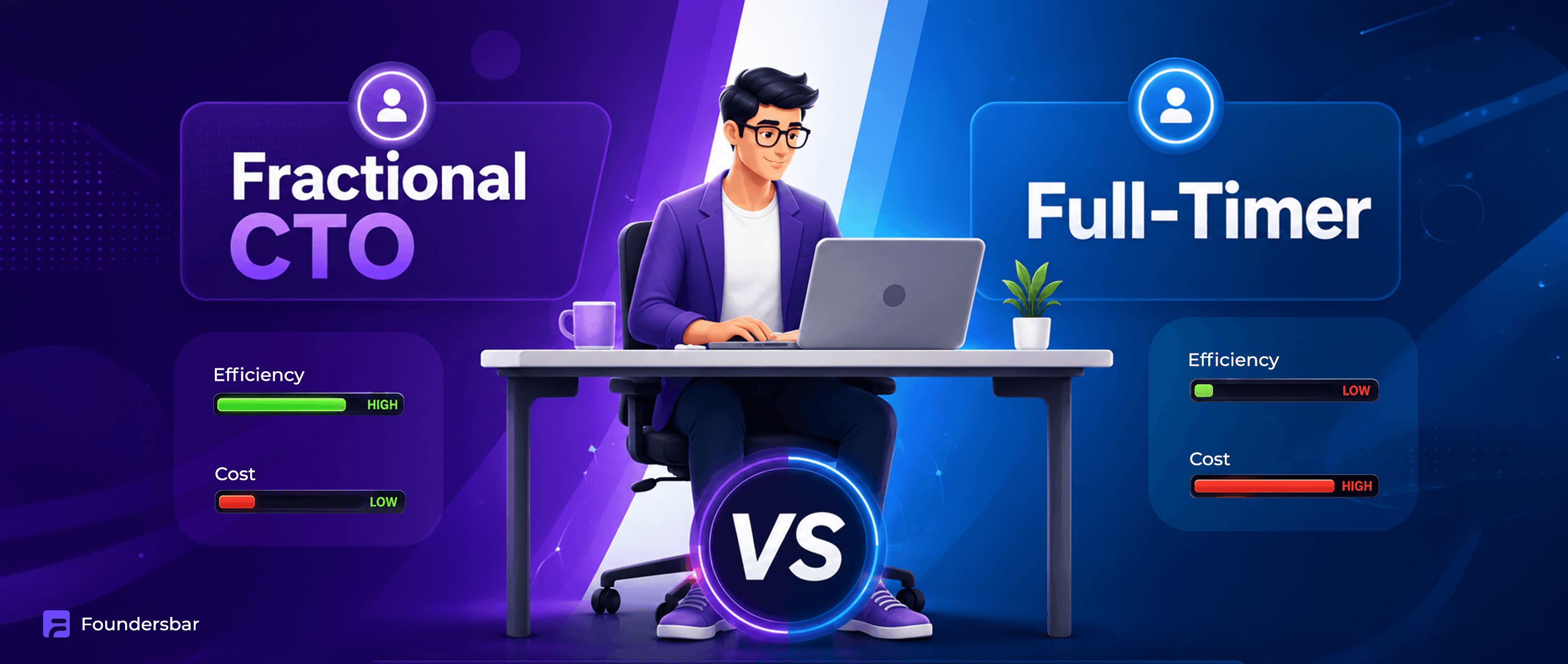
A fractional CTO is a part-time Chief Technology Officer. Typical range is 10 to 25 hours a week on a monthly retainer. They own technical strategy, architecture, the engineering hiring bar, vendor and build-versus-buy calls, a security baseline, and the technical story investors will test. They do not replace the people who write the product.
Startups need this seat when leadership demand shows up before a full-time executive calendar does. That gap is common from pre-seed through early Series A. You are past "the founder can Google a stack." You are not yet at "we have 15 engineers and a standing board technology slot." Fractional exists for that middle. Hire it for judgment. Hire engineers for output. Mix those up and you will either overpay a coder or under-buy a leader.
Key Signs You Need a Fractional CTO Right Now
- You do not need all of these. Two or three that are true this quarter is enough.
- Non-technical founders are choosing the stack and saying yes to senior engineers. That is how you get an unhireable codebase and a polished resume that cannot design a system.
- An agency or contractor team is building with nobody qualified on your side of the table. You need an owner, not another vendor reviewing another vendor.
- The senior engineer is doing two jobs. They ship and pretend to be CTO. Velocity drops. Architecture gets timid. They start updating LinkedIn.
- A raise is inside two quarters and the architecture cannot survive a competent partner. Do this before the data room.
- A technical co-founder left, or never existed. You need coverage in weeks. A six-month full-time search leaves the function empty.
- Cloud and SaaS spend is rising faster than usage. Nobody senior is looking at invoices or killing tools.
- You are about to make a platform bet you cannot reverse. Auth, data model, multi-tenant design, "let's do microservices," rebuild versus ship. Those are CTO calls.
- You keep getting told you need a technical co-founder and the people who want 20% are not people you would keep. Buy the function. Keep the cap table.
If the only pain is "we need more tickets closed," hire engineers. A fractional CTO will not type faster.
When Should You Hire a Fractional CTO? (By Startup Stage)
Pre-seed
Hire before you lock the stack and before you sign a large agency SOW. A fractional CTO services for startups at this point is 8 to 15 hours a week: MVP cut, hire-versus-agency call, architecture that can survive 12 months without a rewrite. Do not hire one to "explore ideas" while there is no product and no plan to build. That is a coffee, not a retainer.
Seed
This is the most common window. You have users or a real build underway. You need the first two to six engineers hired correctly, review and release basics, and a diligence folder that is not a fire drill. 10 to 20 hours a week is the usual band. Bring them in before the next three hires, not after the third bad one.
Series A
Hire or keep fractional when the org is still small and the full-time calendar is not full, or when you need a defined scaling period: reliability, senior hiring, cost, investor reporting, and a handoff plan to a full-time CTO or VP Eng. If you already have 15 engineers and weekly irreversible platform decisions, start the full-time search. Do not use fractional as a permanent discount executive.
After a technical founder or CTO leaves
Hire immediately. Stabilize architecture, team, and vendor relationships. Do not promote the loudest engineer by default and do not grant co-founder equity in a panic.
Benefits of Hiring Fractional CTO Services for Startups
- You get executive judgment without a six-month search. Decisions land this month.
- You keep equity for people who will still be here in year five. Cash retainer instead of a 1% to 3% full-time grant or a 15% to 30% co-founder grant.
- The first engineers get hired against a real bar. That is the highest-leverage work in the first two years.
- Vendors and agencies get adult supervision. Scope shrinks. Quality rises. Invoices get questioned.
- Diligence gets quieter. Someone can defend the system without hedging.
- The internal lead gets coached instead of dumped into a title. A good engagement ends with a function, not a dependency.
The cost-benefit of hiring a fractional CTO only holds if you use them for decisions. If you use them as a part-time senior developer, the math breaks. You are paying leadership rates for ticket throughput.
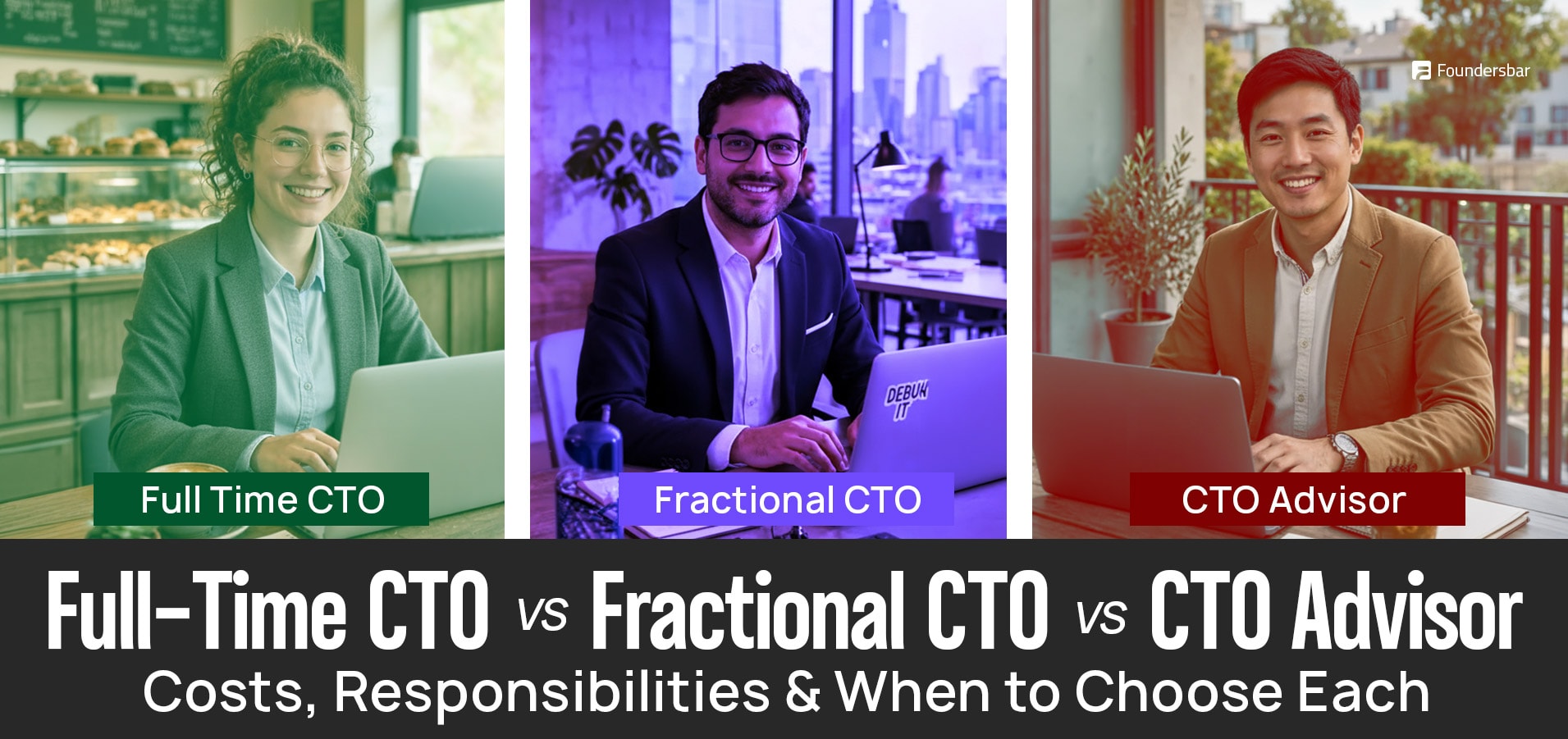
Fractional CTO vs Other Options - Quick Comparison
Full detail lives in the comparison articles. The short filter:
How Much Does a Fractional CTO Cost?
In the 2026 US market, experienced fractional CTOs commonly bill $170 to $400 an hour. Most real retainers land between $5,000 and $15,000 a month for about 10 to 20 hours a week. Lighter advisory seats can sit under $5,000. Heavy or near-interim work can run $15,000 to $25,000 or more.
Compare that with a full-time CTO salary of $250,000 to $400,000 before benefits, recruiting, ramp, and equity. Fractional cto rates looks expensive per hour and cheap per year if you only needed part of the week. It looks wasteful if the week is already a full-time job, or if you only needed a monthly call.
What You Actually Get with Professional Fractional CTO Services
If a pitch cannot name deliverables, it is a standing meeting with a better invoice.
- A written technical roadmap. 90 days tight, two to four quarters visible, tied to business milestones.
- Architecture decisions on record. Stack, data, build-versus-buy, and what you will not do yet.
- Hiring system. Role specs, interview loop, bar, and yes/no on senior candidates.
- Vendor and agency oversight. Who stays, who goes, what the next SOW is allowed to contain.
- A security and reliability floor. Access, secrets, backups, logging. Not a fake SOC 2 project on week one.
- Diligence-ready narrative. What the system is, what will break, what you will do about it.
- A weekly written status. Decisions, risks, hires, spend. If you only get vibes, you are being hosted, not led.
You should not get daily ticket work, 2 a.m. on-call as the default, product management, or IT support. Those are different seats. Details in the companion article on what a fractional CTO does not do.
How to Choose the Right Fractional CTO for Your Startup
- Have they been the adult in the room at your stage? Seed architecture is not the same job as an 80-person platform org.
- Can they explain a no? Ask them what they would refuse to build in your product and why. Vague enthusiasm is a sales call.
- Will they own named decisions? If they talk like an advisor, pay advisor rates.
- Domain is useful. Heroics are not required. Fintech and health need scar tissue. Most SaaS needs someone who has hired and shipped, not a matching logo farm.
- Check how many clients they hold. Five companies at 20 hours each is fiction. Two or three serious seats is normal.
- Ask for the handoff plan on day one. If they cannot describe how they leave, they are selling a subscription, not a function.
- Talk to the last founder they worked with. Ask what broke, not whether they were "strategic."
What This Looks Like When It Works
Named case studies with fake revenue numbers help nobody. These are the three patterns where the hire usually pays for itself. Treat them as tests against your own calendar.
Pattern 1: Agency build, no owner
Non-technical founder, paid agency, six months in, demo looks fine, repo will not survive the next hire. A fractional CTO audits the work, kills a chunk of scope, sets a hiring plan for one internal senior engineer, and puts review gates on what still goes to the agency. The win is not a prettier slide. It is stopping a rewrite you would have funded next year.
Pattern 2: Seed hire loop going wrong
Founder is interviewing "full-stack ninjas" from inbound. Two hires in, velocity is noise. A fractional CTO rebuilds the loop, rejects the next three polished candidates, and lands one person who can own a surface. The cost of the retainer is smaller than the cost of a third mid hire you will manage around for 18 months.
Pattern 3: Raise in 90 days, architecture undocumented
Numbers are good enough to take meetings. Nobody can draw the system. A fractional CTO writes the architecture, names the debt, and sits in diligence. You still might get a technical follow-up. You do not get a partner walking because the founder shrugged at scale questions.
If your situation is none of these and the team is shipping fine with a strong lead, you may only need an advisor. Do not invent a crisis to justify a retainer.
Decision Framework: Should You Hire a Fractional CTO Now?
Answer in order. Stop at the first honest yes.
- Is the gap output? Hire builders. Stop here.
- Do you already have a technical owner who can execute, and you only want a monthly challenge? Hire an advisor. Stop here.
- List the next 90 days of irreversible technical decisions. If the list is empty, you do not need a CTO this quarter.
- If that list is long and nobody internal is qualified, hire a fractional CTO now.
- If that list is long and the work already fills five days a week across people, incidents, and board, hire full-time. Use fractional only as a bridge during the search.
- If a raise is inside two quarters, pull the hire forward. Diligence is a deadline, not a workshop.
- Extra check: will you accept a no on architecture or hiring? If not, skip the retainer. You will pay for agreement.
Conclusion & Next Steps
When should a startup hire a fractional CTO? When judgment is the bottleneck, the calendar is not yet a full-time executive job, and waiting costs more than the retainer. That is most often pre-seed through early Series A, after a technical founder leaves, or in the months before a raise.
Do not hire one to look funded. Do not hire one to write the product. Hire one to make the calls you cannot undo, install a hiring bar, and leave a function behind. If you need that judgment without adding a co‑founder, Foundersbar's fractional CTO service for startup can fill the gap.
If those signs match the next 90 days, start with a scoped conversation about stack, team, and the raise timeline. Explore FoundersBar’s fractional cto service for startup and book a call: Foundersbar
Frequently Asked Questions
Thinking about building a product or taking it to market?
Thinking about building a product or taking it to market?
Thinking about building a product or taking it to market?
Thinking about building a product or taking it to market?