AI Chief of Staff: How I Beat Urgency Bias and Stopped Important Work From Disappearing
Why chat-based AI keeps forgetting what matters, and how a human-in-the-loop system finally made strategic work stick
AI Chief of Staff: How I Beat Urgency Bias and Stopped Important Work From Disappearing
A strategic initiative is clear. Priority is agreed. Owner is assigned. Everyone leaves the meeting feeling aligned. For a short while it feels real.
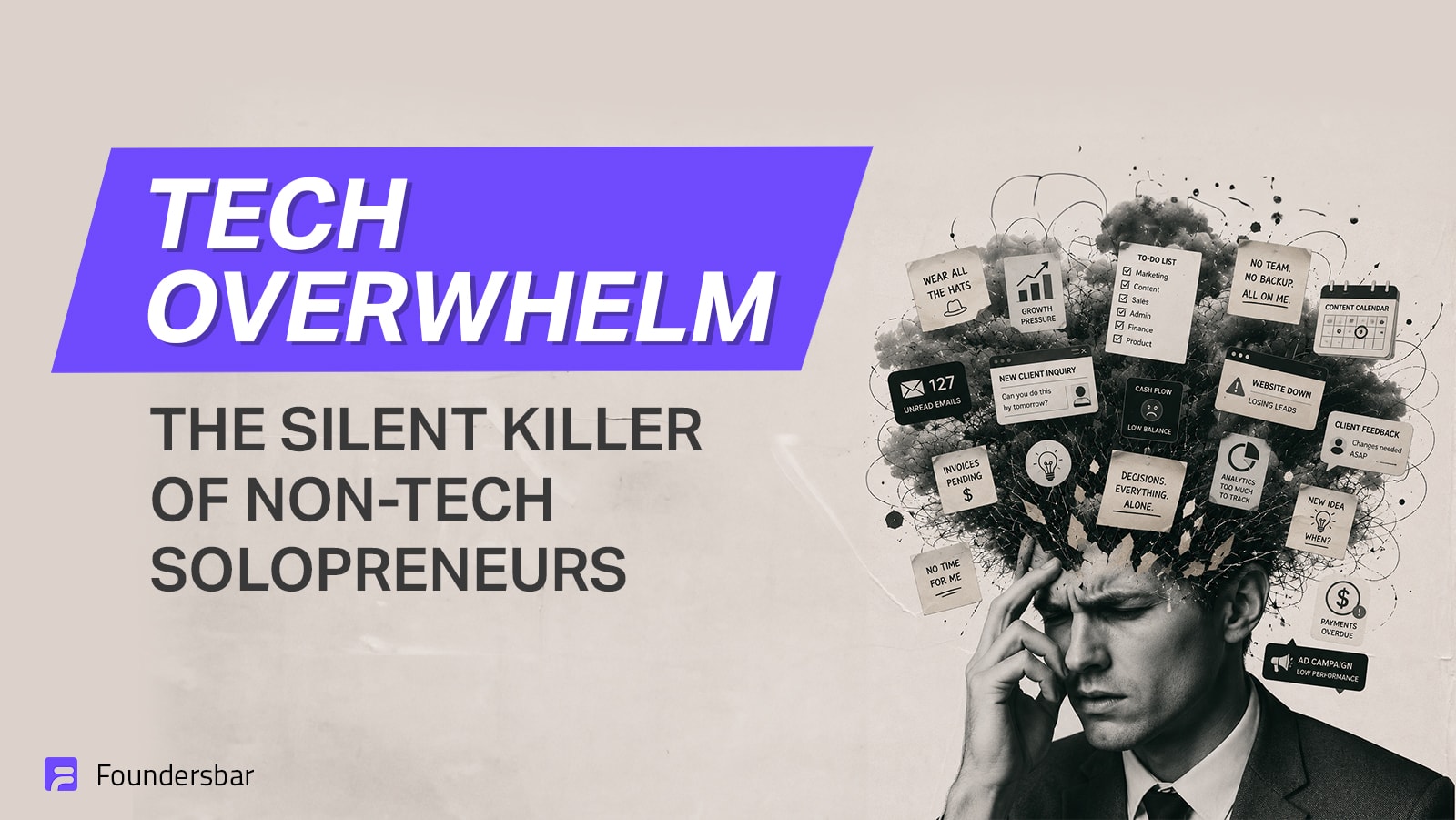
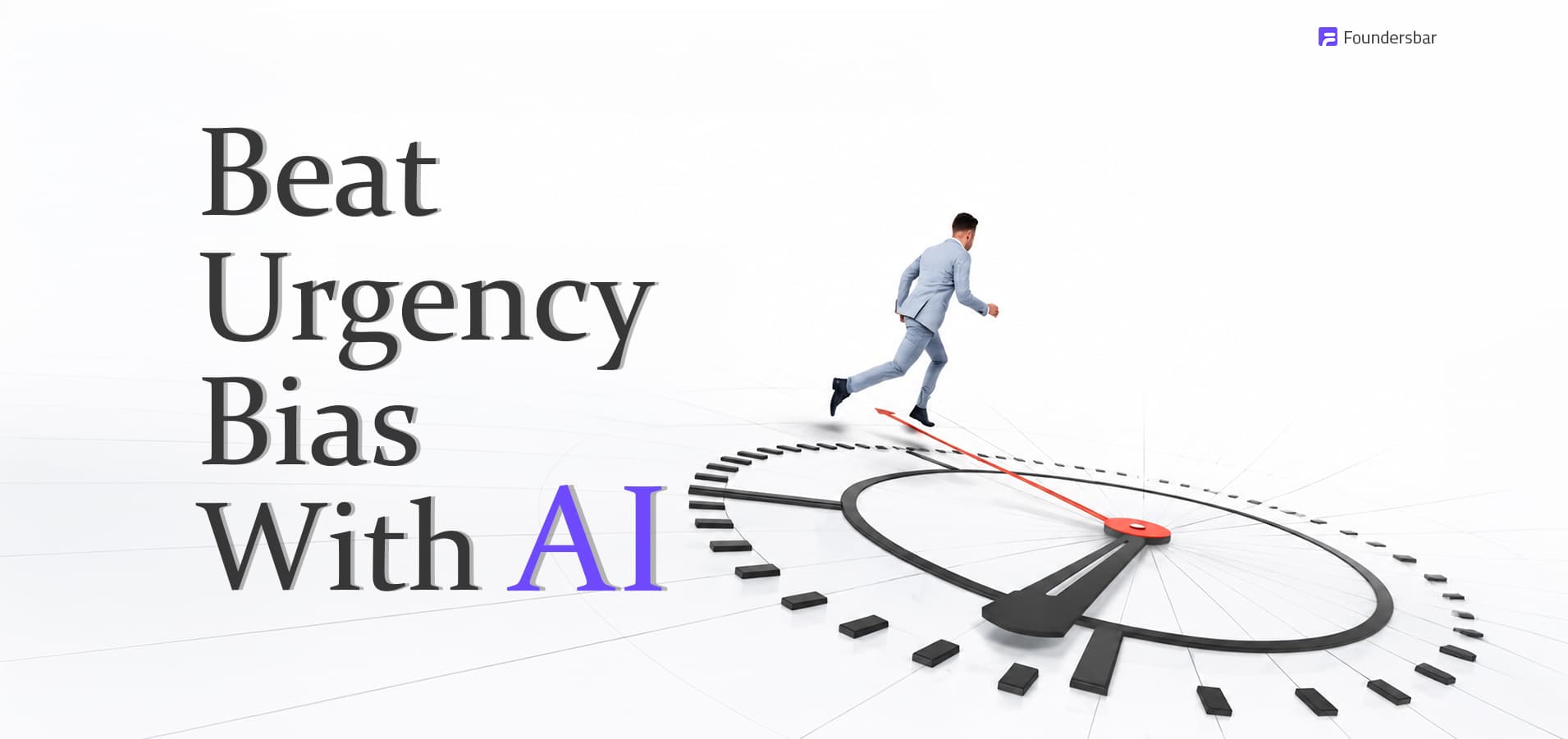
Then the urgent arrives. A customer escalates. A delivery slips. Finance needs numbers by Thursday. You handle all of it, correctly, because that is the job. When you look up again a few days later, the important initiative is still on a list somewhere. It has not been cancelled. It has simply stopped being present.
This is the Task Blackhole. Important work rarely dies in a dramatic moment. It fades under the continuous arrival of new urgency.
I lived inside this pattern long enough to get tired of it. So I built a persistent AI layer, an executive Chief of Staff system, designed specifically to stop important work from disappearing. Not another chatbot. Not another task list. A system where the database is the source of truth, the model is a replaceable component, and the human remains the only decision-maker.
This is what that actually required.
Why the Tools We Already Have Fail at This
Most systems executives rely on were never designed to protect important work from urgency.
Task managers require continuous manual grooming. The moment you stop updating them, they drift from reality. At senior levels that maintenance becomes one more thing competing for scarce attention. Once trust is lost, the tool becomes theatre.
Email and Slack create the strongest illusion of progress. Threads are active. Messages are exchanged. Status is discussed. Yet important commitments still die inside these channels. Activity is not the same as forward motion.
Chat-based AI is powerful in the moment and largely amnesiac the next day. Close the conversation and the context evaporates. Even long context windows do not solve this. Research on long-context models has repeatedly shown a “lost in the middle” effect: information placed in the middle of a long prompt is recalled less reliably than information at the beginning or end. Treating the context window as durable memory is an architectural mistake.
None of these tools are broken. They simply do not own the job of keeping important work present when urgent work arrives. That job has been left to human memory and residual attention, unreliable instruments at scale.
What I Actually Built
The core design decision was simple and non-negotiable: the database, not the conversation, had to be the single source of truth.
Any capable language model should be able to rebuild operating context from the database alone. Conversation history is treated as ephemeral. This sounds obvious in retrospect. In practice most agent demos still optimise for impressive single-session behaviour and quietly fail the moment you need continuity across days.
From that decision several others followed.
Initiatives and commitments are first-class objects. They have owners, status, next actions, and review dates. They do not live only inside someone’s head or a long email thread.
Action Items are separated from monitoring. Open loops that require a human decision are tracked as Action Items. Items that are simply waiting (for a reply, a date, a condition) sit in a quieter monitored state, Active Watches. The system only escalates when the conditions warrant it. Without this distinction everything becomes noise.
The agent acts structurally on enterprise systems. Through Outlook it reads mailbox state, performs incremental scans, matches reference-coded replies, and prepares drafts. Through the operational database it evaluates watches, maintains the ledger of initiatives, and records outcomes. The agent’s job is not primarily to converse. It is to observe, prepare, and record against real organisational systems. The human decides.
External input is untrusted by default. Email, documents, and messages can update state only through defined paths. They cannot issue free-form instructions. When a system can send email and change operational state, prompt injection is a product risk, not an academic one.
Draft-first communication. Nothing consequential leaves the system without explicit human review. The AI prepares. The executive approves or rejects.
The model is a replaceable component. The system is deliberately model-agnostic. Locking critical operating infrastructure to one provider creates unnecessary commercial and operational risk.
The Real Cost in 2026
Nothing comes for free.
A serious persistent layer currently requires high-capability model tiers. Lower-tier plans degrade too quickly on consistency, tool use, and long-running executive work. In practice this has meant running higher-tier subscriptions. The bills are real and they rise with heavy daily use.
The relevant comparison is not AI versus free. It is AI versus a capable human doing the same coordination work. A strong operations coordinator or junior chief of staff costs significantly more, has finite bandwidth, and is subject to the same Task Blackhole dynamics. The AI version currently lands at a fraction of that cost, in the rough range of 30% or less, while offering higher consistency and less process friction. You still pay. You just pay for a different cost structure with different failure modes.
Anyone selling “set it and forget it” agentic systems at this level is either early or not running them under real executive load.
This Is Not Plug-and-Play
The system only became reliable because I treated it as a systems problem, not a prompting problem.
You have to structure memory deliberately. You have to decide what is first-class state and what is ephemeral. You have to design the correction loop for when the model drifts, overweights the wrong signal, or quietly drops context. Having spent decades as an engineer and architect made this natural for me. The requirement itself is not optional. If you cannot (or will not) do this structural work, the system will look impressive in demos and slowly degrade in production.
Model-agnostic design is part of the same discipline. I refuse to lock critical operating infrastructure to one provider’s commercial terms or behavioural quirks. The same architecture that enables model substitution also enables consistency testing across model scales, from mid-size open models in the 70B-class range to frontier systems. You can present the same database state and the same directives to different models and observe where behaviour diverges. Corrections then target the durable artefacts (rules, context, presentation contracts) rather than model-specific prompts.
This same property supports readiness for on-premise or owned-environment deployment. Because the durable ledger lives in your own database, inference can move to local or privately hosted models without redesigning the state model or the approval boundaries. For organisations that care about data residency, long-term cost, or control, that separation is not optional.
Security Is Not Optional
A system that can read email, track commitments, and draft communications is powerful, and therefore needs clear boundaries.
In practice the non-negotiables were:
- The human remains the only decision-maker on consequential actions
- External content is untrusted until processed through defined paths
- Sensitive writes and outbound communication require explicit approval
- Meaningful changes are logged
If you are inside a company, involve your IT and security teams before connecting any AI system to company email, calendars, or internal tools. Respect existing policies and data classification. If you are unsure whether something is permitted, stop and ask. Do not assume the interesting technical path is the allowed one.
I treated security hardening as part of product design, not as a later compliance exercise. That decision paid for itself.
What I Would Tell Another Operator
The Task Blackhole is real. Important work fades more often than it is formally killed. Most of the tools we already use, including most current AI assistants, were not designed to prevent that fade.
A persistent layer that treats context as infrastructure can reduce the problem. It is not free. It currently requires higher-tier models, ongoing structural work, and clear human control. The economics can still favour it relative to human coordination cost, but only if you design for reliability instead of demo magic.
The highest-leverage decisions were not about which model was strongest on any given benchmark. They were about making the database the source of truth, enabling the agent to act structurally on enterprise systems, keeping the human as the decision-maker, refusing provider lock-in, and treating external input as untrusted by default.
That combination is what turned an interesting AI experiment into something I actually open on the days when the urgent arrives and the important still needs to survive.
Interruption recovery costs (Mark et al., CHI)
attention residue (Leroy, 2009)
urgency bias (Zhu, Yang & Hsee)
long-context limitations (“Lost in the Middle”, Liu et al.)
emerging agent security design patterns including the Agents Rule of Two.
Thinking about building a product or taking it to market?
Thinking about building a product or taking it to market?
Thinking about building a product or taking it to market?
Thinking about building a product or taking it to market?