How tech overwhelm hurts solopreneurs? (and what to do)
Too many tools can quietly drain your time, energy, and focus. This article explains why tech overwhelm happens to non-tech solopreneurs and how simple systems can make work easier. It also shows the hidden cost of managing too many disconnected tools. With the right support, you can spend less time fixing tech and more time growing your business.
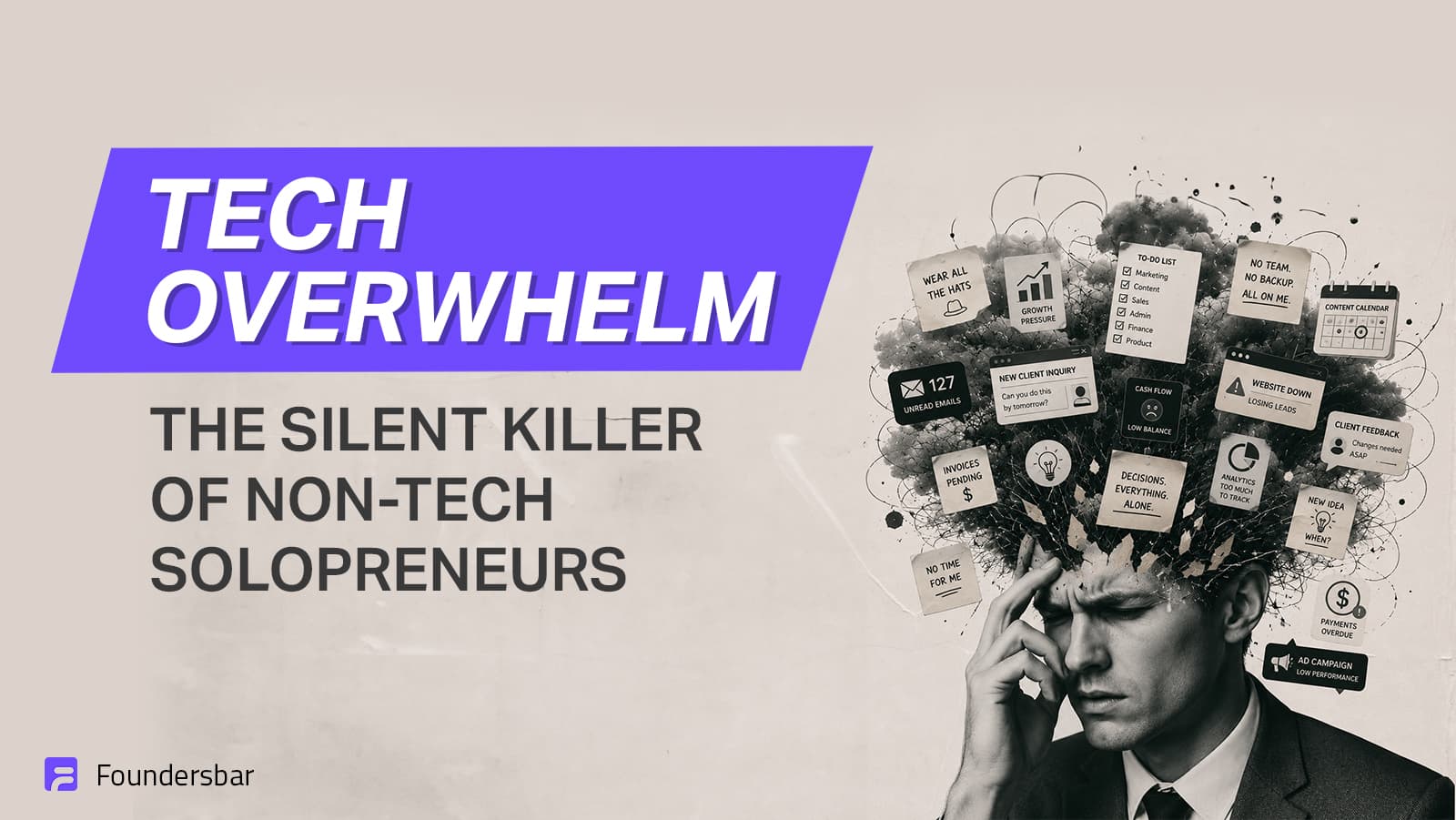
The Tech Overwhelm : That's quietly draining non-tech solopreneurs
You’re staring at your screen, trying to decide between three different CRMs, two email platforms, and a new AI tool that “everyone” is using. Your Zapier has 47 broken connections. Your client onboarding process lives in three different Google Docs and one half-finished Notion workspace. A lead just asked about your pricing, and you realize you changed it three weeks ago but never updated the website.
You close your laptop, exhausted, and whisper the same promise you’ve made for the last eight months:
“I’ll get this all sorted next week.”
Here’s the uncomfortable truth most non-tech solopreneurs never say out loud:
That “I’ll fix it later” pile isn’t just messy. It’s Tech Overwhelm and it’s one of the most expensive, soul-crushing, and silent killers of solo businesses today.
What is tech overwhelm?
Tech Overwhelm is the non-tech solopreneur’s version of the bus factor problem but instead of one key developer disappearing, it’s your time, energy, and business momentum that slowly disappear under the weight of your own tools and processes.
It happens when a non-technical founder tries to run a 2026 business with:
- Too many disconnected tools
- No clear systems or documentation
- Constant decision fatigue around technology
- Zero strategic tech guidance
The result? You spend more time managing your tech stack than actually serving clients or growing your business.
Why this hits non-tech solopreneurs the hardest?
If you’re a coach, consultant, service provider, content creator, or expert who sells your knowledge and you already have enough on your plate.
You didn’t sign up to become a part-time IT administrator, CRM specialist, automation engineer, and website fixer.
Yet that’s exactly what happens.
Every week you:
- Spend hours researching the “best” tool (only to switch again in three months)
- Manually do tasks that should be automated
- Feel guilty because “everyone else seems to have it all figured out”
- Lose sleep over whether you’re using the right tech or falling behind
And because you’re solo, there’s no one to turn to. No CTO. No tech team. No one who can say: “Hey, you don’t need five tools. You need three simple systems.”
So the chaos grows. Quietly. Until one day you realize you’re not running a business anymore , you’re running a very stressful, very expensive hobby.
The real cost (it’s not just time)
Tech overwhelm doesn’t just waste hours. It costs you in ways that are much harder to measure:
- Lost revenue Every hour you spend fighting your tools is an hour you’re not closing clients, creating offers, or delivering high-value work.
- Decision fatigue When you’re mentally exhausted from choosing between 12 email tools, you have nothing left for the decisions that actually move the needle.
- Burnout & resentment Many non-tech solopreneurs start resenting their own business because it feels like it’s running them.
- Inability to scale You can’t take on more clients or raise your prices when your backend is held together with digital duct tape.
- The “I’m falling behind” anxiety That constant low-grade stress that you’re missing some new AI tool or platform that your competitors are using.
This isn’t a motivation problem. This is a support problem.
Why “just figure it out yourself” almost never works
You’ve probably tried:
- Watching endless YouTube tutorials at midnight
- Buying yet another “all-in-one” platform that promised to solve everything
- Asking in Facebook groups and getting 47 conflicting answers
- Hiring cheap freelancers who delivered half-baked solutions
And for a while, it feels like progress. But then something breaks. Or you realize the tool you chose three months ago is the wrong one. Or you spend another weekend trying to fix what should have been simple.
Here’s the hard truth most non-tech solopreneurs eventually face:
You cannot DIY your way out of strategic tech decisions.
Not because you’re not smart enough. But because strategic technology decisions require experience, pattern recognition, and perspective that you only get after making (and learning from) dozens of mistakes.
Every hour you spend fighting your tools is an hour you’re not serving clients, creating offers, or resting. And over time, that adds up in not just in lost time, but in lost momentum, confidence, and joy in your business.
This is the quiet trap so many talented founders fall into.
Who is a fractional CTO?
More and more non-technical founders are quietly bringing in a fractional CTO, not to code for them, but to think for them.[1]
A fractional CTO is a senior technical leader who works with you part-time to:
- Audit your current tech stack and kill what’s not working or even build a custom one for you!
- Design simple, scalable systems that actually fit your business
- Choose the right tools (and stop the endless switching)
- Build automations that save you 10-15 hours a week [2]
- Create proper client journeys so everything feels premium and professional
- Make sure your technology supports your growth instead of holding you back
Think of them as your technical co-pilot, someone who translates your vision into clean, working systems without you ever having to learn code or spend your evenings watching tutorials.
You stay in your zone of genius (serving clients, creating offers, building relationships). They handle the tech chaos.
How it’s different from other options?
The data behind the decision
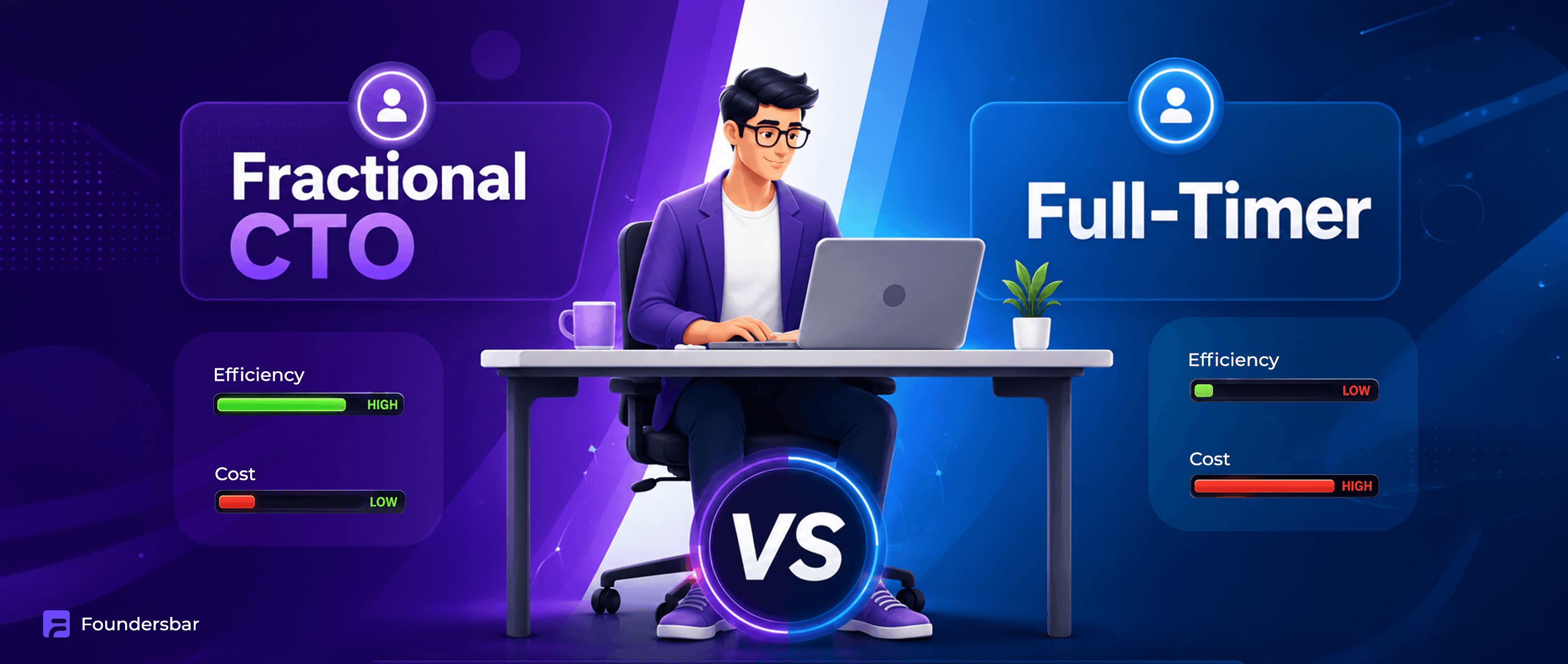
- A full-time CTO costs $250,000+ per year (plus benefits and equity). Most non-tech solopreneurs can’t (and shouldn’t) afford that. [3]
- A fractional CTO typically costs $5,000-$15,000 per month for senior-level strategic guidance, often 40-60% less than a full-time hire.
- Harvard Business Review has highlighted that fractional leadership is one of the fastest-growing ways small and medium businesses access senior expertise without the full-time commitment. [4]
- Non-technical founders who bring in fractional technical leadership report faster decision-making, lower tool costs, and significantly less burnout. [5]
The math is simple: You’re already paying for the chaos with your time, energy, and missed opportunities. A fractional CTO is often the cheaper option in the long run.
How to know if you need one?
You probably need strategic tech help if:
- You have more than 5 tools that don’t talk to each other
- You spend more than 5 hours a week on manual admin or tech fixes
- You’ve changed your CRM, email platform, or website builder in the last 12 months
- You feel anxious every time someone asks about your “tech stack”
- You’ve been saying “I’ll get organized” for more than 6 months
- You own or operate a custom-built app
- You have one or more technical vendors [6]
If any of these sound familiar, you’re not behind. You’re just carrying a burden you were never meant to carry alone.
Final verdict: Stop stressing about being your own CTO
Here’s the thing no one tells non-tech solopreneurs: Its takes a lot of toll to be the CTO, developer, automations expert, and customer support all at once. That’s not strategy , that’s survival mode with extra steps.
The data backs this up. Studies show that founders who try to do everything themselves burn out faster, make more expensive mistakes, and grow slower than those who bring in strategic support (Harvard Business Review, 2024-2025).
The founders who are still thriving years later? They focus on where they add real value and built simple systems or everything else.
Technology isn’t a test of your worth. It’s infrastructure. The founders who win in the long run aren’t the ones doing the most. They’re the ones who built the systems and then got out of the way.
Sheba Consulting. (2023). Why Is a Fractional CTO Critical for Non-Technical Startup Founders? Link
Go Fractional. (2026). What Is a Fractional CTO? 9 Key Benefits + How to Hire One. Link
EightBit Studios. (2025). Fractional CTO vs. Full-Time CTO for Startups. Link
Harvard Business Review. (2024). How Part-Time Senior Leaders Can Help Your Business. Link
Harvard Business Review. (2025). How to Make Fractional Leadership Work. Link
AmazingCTO. (2026). 7 Signs You Need a Fractional CTO. Link
Thinking about building a product or taking it to market?
Thinking about building a product or taking it to market?
Thinking about building a product or taking it to market?
Thinking about building a product or taking it to market?