Fractional CTO vs Full-Time CTO vs CTO Advisor: Costs, Responsibilities & When to Choose Each
A practical comparison of fractional CTOs, full-time CTOs, and CTO advisors for startups, covering responsibilities, costs, time commitments, accountability, and startup-stage fit. Learn how to choose the right technical leadership model based on your team, upcoming technical decisions, budget, and need for hands-on ownership.

Fractional CTO vs Full-Time CTO vs CTO Advisor: Costs, Responsibilities & When to Choose Each
Non-technical founders get this decision wrong in the same two ways. They either hire a full-time CTO too early and burn a year of runway on a seat that is only half used, or they put a CTO Advisor on the deck and assume that person will stop a bad hire, kill a rewrite, and survive investor diligence. Those are different jobs. The titles sound related. The cost, hours, and accountability are not.
This comparison covers fractional CTO vs full-time CTO vs advisor in the terms that actually change the outcome: what each role owns, what it costs in 2026, which startup stage it fits, and the mistakes that turn a leadership hire into an expensive title. If you want the deeper job description of the fractional seat itself, read What Does a Fractional CTO Do (and Not Do) for Startups. This piece is the buying guide.
Quick Overview: The 3 Options
Three options. Do not blend them.
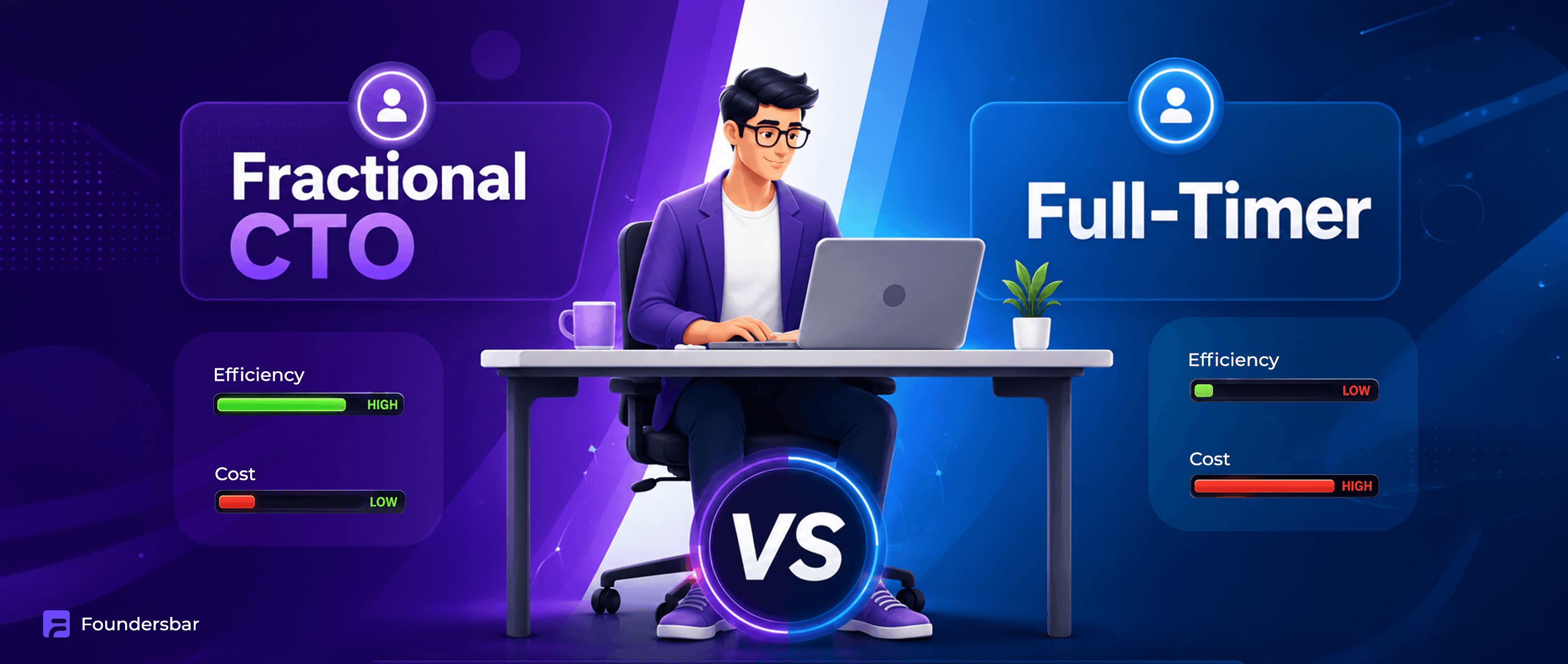
- Fractional CTO. Part-time executive. Usually 10 to 25 hours a week on a cash retainer. Owns architecture, hiring bar, vendor calls, and the technical story for investors. Embedded enough to decide. Not in the building five days a week.
- Full-time CTO. Employee executive. Owns the entire technology function: strategy, delivery culture, incidents, people, board, and long-term platform bets. Salary plus equity plus benefits. Exclusive calendar.
- CTO Advisor. Outside voice. A few hours a month. Reviews big decisions, lends a name, answers questions. No operational ownership. Often paid in equity, sometimes a small cash fee.
If you need decisions made and owned, that is fractional or full-time. If you need a second opinion and a credible name, that is an advisor. Mixing those up is how founders pay advisor rates for a CTO-shaped hole, or CTO rates for work a senior engineer should have done.
What Each Role Actually Does
What a Fractional CTO Does
A fractional CTO does the CTO job on a slice of the week. Typical fractional CTO responsibilities vs a full-time CTO look the same on paper and different on the calendar: technical roadmap, architecture decisions that are expensive to reverse, engineering hiring, vendor and build-versus-buy calls, a security baseline, diligence prep, and coaching the internal lead who should eventually replace them.
They sit in Slack and planning. They make hire or no-hire calls. They tell the founder what not to build. They do not write most of the product, run every standup, or carry the pager as a default. For the full list of what they do and do not do, use the companion article. The short version: you are buying judgment and ownership, not coding hours.
What a Full-Time CTO Does
A full-time CTO owns the function, not a scope document. They set multi-year technical direction, build the engineering org, run or oversee delivery, live through incidents, manage performance, represent technology to the board, and stay close enough to the product that architecture and roadmap do not drift apart.
The work that only shows up at full-time intensity is culture, continuous people management, customer-facing technical sales on hard deals, and being present when production breaks at odd hours. That is why the role gets expensive. You are not paying for extra meetings. You are paying for exclusive attention when the company is large enough to use it.
What a CTO Advisor Does
A CTO advisor, sometimes called a technical advisor, reviews. They take a monthly call, comment on an architecture note, intro a candidate, and appear on the cap table or the deck. They are not in sprint planning. They do not own the hiring bar. They are not on the hook when the agency ships a mess.
That is still useful. Founders with a strong internal tech lead often need a senior person to pressure-test a platform bet or a raise narrative. It is not useful as a substitute for someone who will reject a bad senior hire on Tuesday and rewrite the vendor contract on Thursday.
Detailed Comparison
Use this table as the filter. If a row does not match what you actually need this quarter, you are looking at the wrong column.
The row that decides most searches is "Owns outcomes." If nobody internal can execute after a recommendation, an advisor will not close the gap. If the company cannot keep a senior executive busy five days a week, a full-time CTO will invent process to fill the week.
Cost Breakdown
Talk about fractional CTO pricing vs full-time in loaded terms, not sticker salary versus sticker retainer. Otherwise the full-time option always looks "only" three times more expensive, and it is not.
CTO Advisor cost
Typical package: 0.1% to 0.5% equity over a few years, sometimes $500 to $4,000 a month cash on top. You are buying a few hours and a name. Cheap if you already have operators. Expensive if you thought you bought a CTO.
- Pros. Fast, light on cash, useful for diligence talking points and pattern-matching on one hard decision.
- Cons. No ownership. Slow or no response when the agency goes sideways. Founders confuse the title on the slide with coverage in the repo.
Cost of a fractional CTO for startups
In the 2026 US market, experienced fractional CTOs commonly bill $170 to $400 an hour. The usual retainer is $5,000 to $15,000 a month for about 10 to 20 hours a week. Advisory-light seats can sit under $5,000. Heavy or near-interim work can run $15,000 to $25,000 or more. Specialists in regulated industries or deep AI platforms price at the top.
Annualized, that is often $60,000 to $180,000 cash for a standard seat, with little or no equity. You can start in days or weeks and leave in a month if the fit is wrong.
- Pros. Senior judgment without a six-month search. No large equity grant. Scope can shrink as the internal lead grows.
- Cons. Shared calendar. Not your 2 a.m. pager by default. Weak if you pretend they are a development team.
Full-time CTO cost
Base salary is often quoted at $250,000 to $400,000. That is not the year-one bill. Add payroll load, bonus, benefits, a recruiting fee that can run a quarter of first-year cash, three to six months of search and ramp, and 0.5% to 2% equity. Honest year-one loaded cost is frequently in the mid-six figures before you count the cost of a miss.
- Pros. Exclusive attention. Real org building. Continuity through incidents and a long product arc.
- Cons. Slow to hire. Painful to unwind. Easy to over-buy when the team is still five people and the roadmap does not fill an executive week.
A rough planning frame: advisor if you need a few hours of challenge. Fractional if you need a day or two of ownership each week. Full-time if technology leadership is already a five-day job.
When to Choose Each Option
When to choose a fractional CTO
Choose fractional when the bottleneck is senior technical judgment and the company cannot yet keep a full-time CTO busy without inventing work. That is the default for many pre-seed and seed companies, and for early Series A teams that still have a handful of engineers.
Clear triggers: non-technical founders are making stack and hiring calls; an agency is building with nobody qualified on your side of the table; a technical co-founder left; a raise is coming and the architecture will not survive diligence; the senior engineer is doing two jobs and starting to make timid calls.
If those lines describe you, a fractional CTO is usually the best CTO option for startups at that stage. Not because the title is fashionable. Because the work is real and the hours are not yet a full-time job.
When to choose a full-time CTO
Choose full-time when engineering is large enough that architecture, people, incidents, and board work need one person every day. Practical signals: 10 or more engineers, multiple squads, a platform that is the product, enterprise deals that need an executive in the room, or a board that expects a standing technology voice.
Also choose full-time after a fractional engagement has done its job: the roadmap is clear, the hiring bar exists, and the remaining work is culture and continuous management rather than a short list of irreversible decisions. Do not hire full-time just because a competitor has the title. Hire it because the calendar is already full.
When to choose a CTO advisor
Choose an advisor when you already have someone who can execute. A strong technical co-founder or eng lead needs a senior person to pressure-test a bet, sit in a partner meeting, or intro specialized talent. That is a few hours a month. It is not a leadership model.
If the company has no internal technical owner, an advisor will write thoughtful Slack messages and the same bad decisions will still ship. That is the most common wasted advisor seat.
Common Mistakes Founders Make
- Hiring a full-time CTO before there is a full-time job. You get process theater, restless equity, and a search you cannot afford to reverse for a year.
- Hiring an advisor and calling them a fractional CTO. Different accountability. Different price. Different outcome. Ask what they will own, not what they have seen.
- Paying executive rates for coding hours. If the product is unbuilt, hire builders and put a fractional CTO over them. Do not buy a title to close tickets.
- No written scope. Hours, decision rights, response time, and an off-ramp. If it is not on paper, you will argue about Slack latency in month two.
- No handoff plan. A fractional seat with no path to an internal lead or a full-time hire becomes a permanent tax.
- Waiting until diligence week. Architecture cleanup and a hiring bar take months. A frantic advisor call the week before the data room does not.
- Ignoring founder behavior. If you will not take a no on architecture or hiring, none of the three options will work. You do not have a CTO problem. You have a decision problem.
Decision Framework
Answer these in order. Stop at the first yes that is actually true, not the one that sounds impressive on a deck.
- Is the real gap code output, not judgment? Hire engineers or an agency. Do not hire a CTO of any flavor to type faster.
- Do you already have a technical owner who can execute, and you only need a senior challenge on specific bets? Hire a CTO advisor.
- Do you have a list of irreversible technical decisions in the next 90 days (stack, architecture, first senior hires, vendor lock-in, diligence story) and nobody qualified to make them? Hire a fractional CTO.
- Is technology leadership already filling a five-day week: multiple teams, incidents, people management, board, hard customer deals? Hire a full-time CTO.
- Are you in between 3 and 4? Stay fractional, raise the internal lead, and write the criteria that trigger the full-time search. Do not upgrade the title to soothe investors if the work has not upgraded.
One extra check: can this person say no to you and have it stick? If not, skip the hire. You will pay for agreement, not leadership.
Fractional CTO vs full-time CTO vs advisor is not a branding choice. It is a match between the work you have and the ownership you are willing to pay for. Advisors review. Fractional CTOs decide part-time. Full-time CTOs run the function. Pick the column that matches the next 90 days of irreversible technical work.
If the work is judgment, hiring bar, architecture, and diligence, and the week is not yet full, start with a scoped fractional seat rather than a six-month executive search. Talk through hours, decision rights, and the first 90 days on the Fractional CTO Services for startups
Frequently Asked Questions
Thinking about building a product or taking it to market?
Thinking about building a product or taking it to market?
Thinking about building a product or taking it to market?
Thinking about building a product or taking it to market?