How to Plan a Product Roadmap for Your Los Angeles Startup in 2026
A practical guide for Los Angeles startup founders on creating a product roadmap that connects business goals, customer needs, technical capacity, and market opportunities. Learn how to prioritize initiatives, choose the right roadmap format, align development with LA-specific opportunities, and keep your roadmap flexible as your startup grows.
How to Plan a Product Roadmap for Your Los Angeles Startup in 2026
How should Los Angeles startups create a product roadmap that actually drives progress instead of becoming a static wish list? A strong product roadmap connects customer problems, business goals, technical reality, and market timing into a clear, flexible plan. It helps founders prioritize limited resources, communicate effectively with teams and investors, and avoid building features that do not create meaningful progress. This expanded guide provides practical, stage-appropriate methods for planning, maintaining, and executing a product roadmap tailored specifically to the opportunities and constraints of the Los Angeles ecosystem.
For the complete Los Angeles startup ecosystem overview, industry specialties, funding landscape, and related resources, return to the central hub: Los Angeles Startup Ecosystem 2026.
What Is a Product Roadmap and Why Does It Matter for LA Startups?
A product roadmap is a high-level visual and strategic plan that shows what you intend to build, why it matters, and the approximate sequence in which work will happen. It is not a detailed project plan filled with every ticket or a rigid commitment. Instead, it communicates direction, priorities, desired outcomes, and strategic intent.
A well-crafted roadmap keeps the team aligned, protects runway by focusing effort on high-value work, and makes it easier to decline low-impact requests especially important in a high-opportunity, high-cost city like Los Angeles.
In the Los Angeles context, roadmaps serve additional purposes. They help sequence work around industry pilot windows, entertainment or aerospace partnership cycles, accelerator program milestones, and local events. Founders working in media tech, health-tech, space/defense, or climate solutions often need to align product development with external calendars that pure software markets may not face.
Non-technical founders especially benefit from clear roadmaps, see How Non-Technical Founders in Los Angeles Can Build Successful Software Companies.
Key Principles of an Effective Product Roadmap
Successful roadmaps for LA startups share several core principles:
- Outcome-oriented rather than feature-oriented - Focus on the customer or business result instead of simply listing features.
- Flexible and living - Expect regular updates as customer feedback, technical discoveries, and market conditions change.
- Honest about capacity - Reflect real team bandwidth, technical constraints, and current runway.
- Strategically aligned - Every major item should connect to a company goal or validated customer problem.
- Easy to communicate - Simple enough that investors, potential partners, new hires, and advisors understand it quickly.
- Balanced - Include customer-facing work, infrastructure, technical debt reduction, and exploratory bets in appropriate proportions.
Step-by-Step: How to Build a Strong Product Roadmap
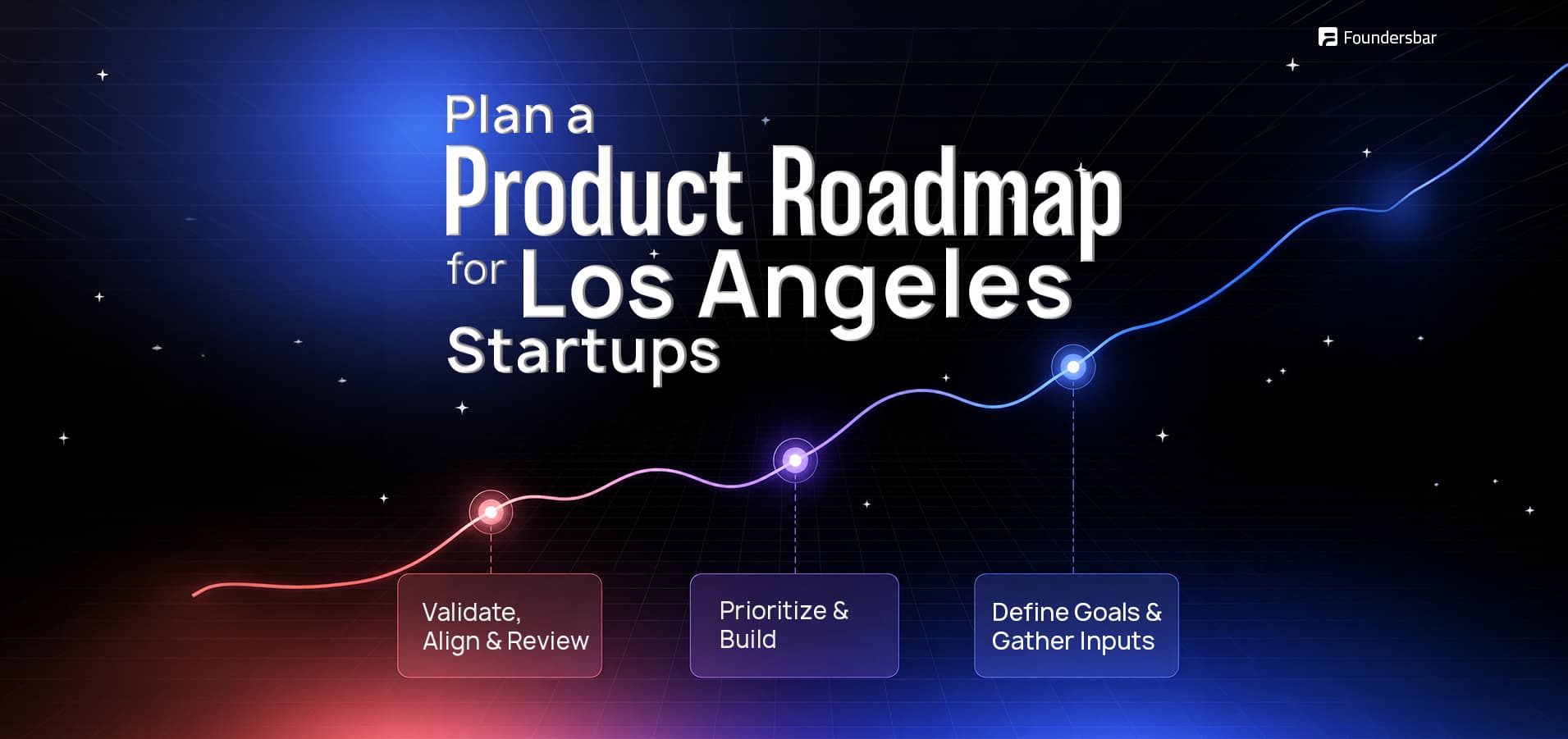
Clarify Strategic Goals and Hard Constraints - Begin by defining the most important business objectives for the next 6-12 months. Examples relevant to LA startups include securing a defined number of pilot customers in a vertical, reaching specific engagement or retention metrics, preparing for a funding round, or achieving compliance readiness for health or aerospace work. Document constraints such as available runway, team size, technical skill gaps, and regulatory requirements.
Gather High-Quality Inputs - Collect information from multiple sources:
- Direct customer and pilot partner conversations
- Usage analytics and support tickets
- Competitive landscape and market trends
- Internal technical feasibility assessments
- LA-specific opportunities such as corporate innovation programs, industry events, or accelerator demo days
Identify Themes or Problem Areas - Group potential work into a small number of themes. Strong themes focus on problems or outcomes rather than solutions. Examples: “Improve pilot onboarding success,” “Enable enterprise security requirements,” “Reduce time-to-value for new users,” or “Support new media format integrations.”
Prioritize with Discipline - Use a consistent prioritization method. Popular approaches include:
- Value vs. Effort matrix
- RICE scoring (Reach, Impact, Confidence, Effort)
- MoSCoW (Must, Should, Could, Won’t)
- Opportunity scoring based on customer pain and frequency
Factor in technical risk, dependencies, strategic timing, and opportunity cost. In Los Angeles, also weigh the value of landing a high-profile pilot or meeting an industry deadline.
Structure the Roadmap Visually - Choose a format that matches your stage and audience. Common effective formats include Now / Next / Later columns, quarterly themes with key outcomes, or a timeline view that indicates confidence levels (committed vs. planned vs. exploratory).
Validate Feasibility and Capacity - Review the draft roadmap with your technical lead, fractional CTO, or development partner. Confirm that the planned work fits realistic capacity and does not create unacceptable technical debt or risk.
Communicate, Align, and Establish Review Cadence - Share the roadmap with the full team and key stakeholders. Set a regular review rhythm so the document remains a living tool rather than a static artifact.
Expanded Quick-Start Checklist
- Document 2-4 primary company goals for the next two quarters.
- List the top customer or pilot problems you are solving.
- Group potential initiatives into 3-6 clear themes.
- Score and force-rank items using a consistent prioritization method.
- Map prioritized work into a Now / Next / Later or quarterly structure.
- Review technical feasibility and capacity with technical partners.
- Publish a clean version and schedule the first review meeting.
- Define how success will be measured for the top items.
Roadmap Formats That Work Best for LA Startups
Short Answer: Most Los Angeles startups before Series A achieve the best results with a Now / Next / Later or quarterly theme roadmap that balances direction with flexibility.
Aligning the Roadmap with LA Ecosystem Opportunities
Los Angeles founders should deliberately incorporate external timing into roadmap planning:
- Accelerator program milestones and demo days
- Industry conferences and partnership windows in entertainment, aerospace, or health
- Corporate pilot or innovation challenge cycles
- Fundraising timelines and investor expectations
Sequencing work so that a credible product version is ready for a key pilot or event can create disproportionate value compared with pure internal prioritization.
How Product Roadmaps Connect to Other Critical Decisions
A living roadmap improves decision quality across the company:
- It clarifies hiring needs and whether local, remote, or offshore talent is most appropriate.
- It defines the right scope for fixed-cost development or agency engagements.
- It gives fractional CTOs clear priorities for architecture, risk management, and technical debt.
- It supports cost control by preventing unfocused or speculative work.
Measuring Whether Your Roadmap Is Working
Track both process and outcome indicators:
- Percentage of roadmap items completed on the intended timeframe
- Customer or pilot impact of delivered work
- Reduction in unplanned reactive work
- Team clarity and alignment scores
- Progress against the strategic goals the roadmap was designed to support
Review these metrics during monthly and quarterly roadmap sessions.
Common Product Roadmap Mistakes and How to Avoid Them
- Treating the roadmap as an unchangeable commitment → Frame it as a plan that will evolve with new information.
- Overloading it with features instead of outcomes → Force every major item to answer “what customer or business result does this produce?”
- Ignoring technical debt and platform work → Explicitly allocate capacity for foundational improvements.
- Building in isolation → Incorporate customer, pilot, and technical input early and often.
- Updating too rarely or changing direction daily → Establish a clear review cadence and change process.
- Making it too detailed too early → Keep early roadmaps high-level so they remain usable.
Tools and Recommended Cadence
Early teams can succeed with Notion, Miro, Linear, or even a well-structured spreadsheet. As complexity grows, dedicated tools such as Product board or advanced Jira/Linear roadmap views become useful. The specific tool is less important than consistent process and clear ownership.
Recommended Cadence:
- Weekly: Check progress on current Now priorities
- Monthly: Light review and adjustments based on new learning
- Quarterly: Strategic refresh aligned with company goals, funding milestones, and major external opportunities
Why a Clear Product Roadmap Creates Advantage in Los Angeles
Los Angeles provides exceptional access to customers, partners, talent, and capital across multiple high-potential verticals. Without a focused roadmap, teams risk spreading effort too thinly or chasing opportunities that do not compound. A living, outcome-driven roadmap helps founders stay disciplined, allocate scarce resources effectively, communicate with clarity, and adapt quickly as they learn from the market and from real users.
Foundersbar regularly supports Los Angeles founders in turning early ideas into structured product blueprints and realistic roadmaps, then helps execute those plans through fixed-cost development and fractional technical leadership. This combination reduces risk, improves prioritization, and keeps ownership and strategic control with the founding team.
Ready to build a clear, actionable product roadmap for your Los Angeles startup? Book a free strategy call at foundersbar to discuss product discovery, roadmap design, prioritization, or execution support tailored to your stage and goals.
Frequently Asked Quesntions
Thinking about building a product or taking it to market?
Thinking about building a product or taking it to market?
Thinking about building a product or taking it to market?
Thinking about building a product or taking it to market?