What Makes Los Angeles a Top Startup City in 2026?
Explore why Los Angeles is a leading startup hub in 2026. Learn about LA's startup ecosystem, funding, top industries, accelerators, talent, and resources for founders.
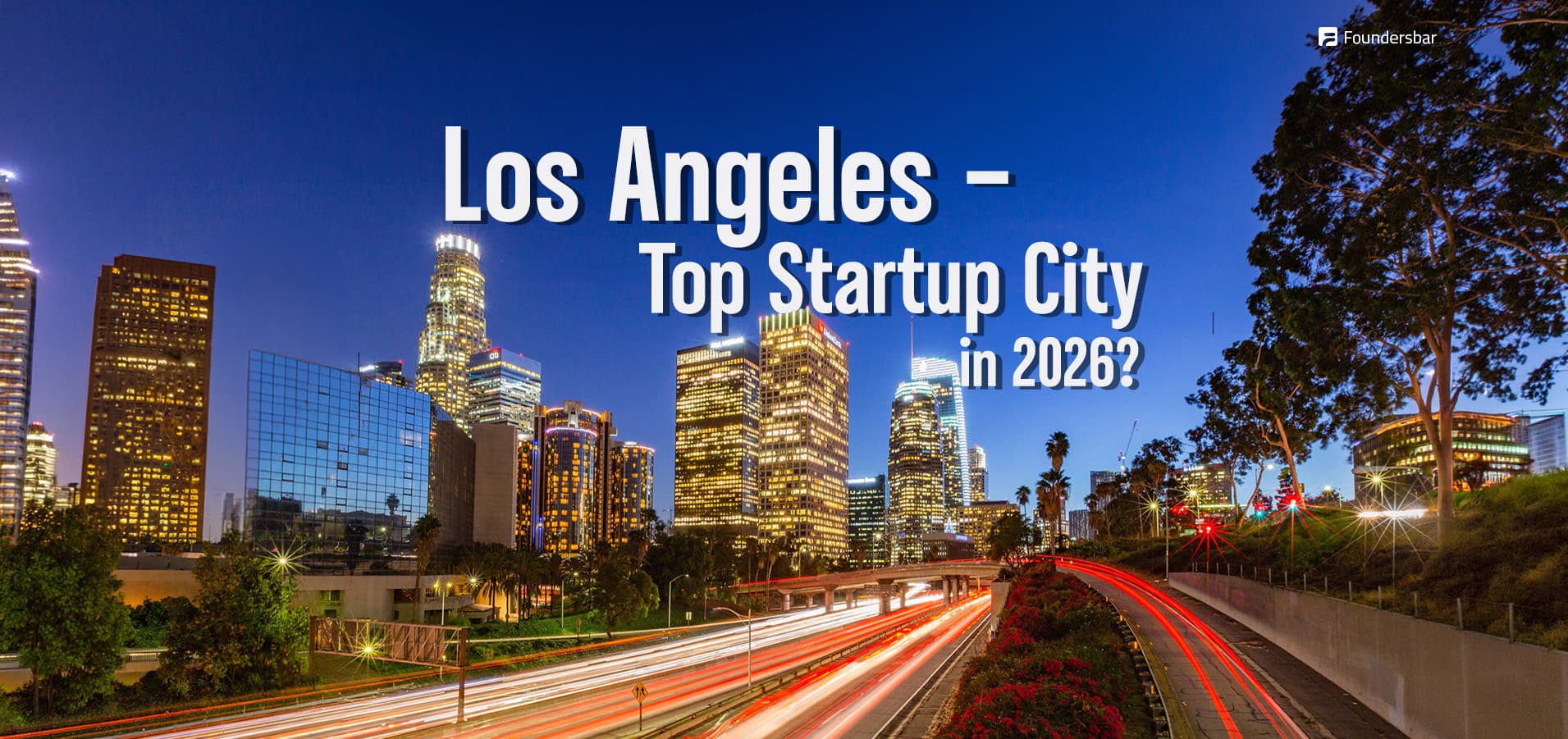
Why Los Angeles Is a Leading Startup Hub in 2026
Los Angeles (city proper population around 3.8-4 million; Greater Los Angeles metro exceeding 18 million) is the second-largest metropolitan area in the U.S. and one of the largest economies in the world, with regional GDP estimates ranging from $1.3 trillion to over $1.6 trillion.
The city combines Mediterranean weather, beaches, diverse neighborhoods, and a global entertainment industry with serious engineering and research depth. This mix attracts ambitious founders and talent who value lifestyle alongside professional opportunity. Major infrastructure (LAX, extensive ports, highway network) supports logistics-heavy or global businesses, while neighborhoods like Silicon Beach (Santa Monica, Venice, Playa Vista), Culver City, El Segundo (“Aerospace Alley”), and Downtown LA provide distinct vibes and industry clusters.
Key advantages for founders include:
- Massive creative + technical talent overlap (engineers who understand storytelling; creatives comfortable with code and AI tools).
- Strong university pipelines from UCLA, USC, and nearby Caltech.
- Policy and corporate support in cleantech, aerospace/defense, and entertainment innovation.
- Growing recognition in national and global rankings for ecosystem momentum.
What Is Los Angeles’ Core Specialties and Industry Strengths for Startups?
LA’s ecosystem stands out because of its breadth rather than single-sector dominance. Funding and activity span multiple high-potential areas, creating natural synergies (e.g., AI tools for film/VFX or climate tech for entertainment venues and data centers).
Top sectors and opportunities (2025-2026 context)
Aerospace and entertainment tech often lead in funding share in recent analyses, while AI acts as a multiplier across everything.
How Strong Is the Los Angeles Startup Ecosystem? Funding, Talent & Infrastructure
LA consistently ranks in the global top tier (often #4-6 in recent ecosystem reports) with thousands of startups and multi-billion-dollar annual funding flows. One 2025 snapshot showed the broader LA area with strong growth (+9.5% in one index) and over $10B+ in tracked startup funding alongside nearly 8,000 startups.
- Talent strength is a standout: The region has one of the largest tech workforces in the U.S. (hundreds of thousands of tech roles) and ranks highly for AI talent density. UCLA, USC, and Caltech supply both engineering depth and creative talent. The entertainment industry adds a storytelling and user-experience edge that pure engineering hubs sometimes lack.
- Venture capital is robust and active. Prominent LA-based or highly active firms include Upfront Ventures, Mucker Capital, Strong Ventures, MAGIC Fund, Fifth Wall, Greycroft, and others. National funds (a16z, Sequoia, etc.) also deploy capital here, especially in AI, consumer, and deep tech. corporate venture and strategic capital from entertainment and aerospace players add unique deal flow.
- Infrastructure & real estate have evolved. Classic Silicon Beach remains vibrant with big-tech offices (Google, Amazon, Netflix, etc.) and startup density, while Culver City has emerged as an inland extension and El Segundo/Downtown offer specialized pockets. Co-working, accelerators, and university incubators provide flexible entry points.
What Resources and Support Networks Exist for LA Startups?
Los Angeles offers a dense network of accelerators, incubators, university programs, and events tailored to its strengths.
Key accelerators and incubators include:
- LACI (Los Angeles Cleantech Incubator) - City-backed leader for climate tech; strong on pilots, mentorship, and commercialization support. Multiple cohorts annually with notable economic impact from portfolio companies.
- Techstars Los Angeles - Focus on entertainment, media, sports, and consumer tech.
- Cedars-Sinai Accelerator - Healthtech and life sciences emphasis.
- UCLA Anderson Venture Accelerator and USC Viterbi Startup Garage - University-affiliated programs with strong mentorship and demo days.
- a16z Speedrun - Gaming and entertainment tech focus.
- Others: FoundersBoost LA, Launchpad LA, Idealab (Pasadena), Plug and Play presence.
Events such as LA Tech Week, TiECon Los Angeles, Startup Arena, and numerous demo days provide consistent networking. Many programs actively recruit first-time and diverse founders.
How to Launch and Scale a Startup in Los Angeles: Practical Steps
- Validate and position your idea locally. Leverage LA’s unique crossovers (entertainment + AI, aerospace hardware + software, climate + urban policy). Talk to potential customers, pilots, or corporate partners early. Use university networks and incubator office hours.
- Choose the right entry point (accelerator, university program, or independent). Many founders start with a structured cohort for mentorship, community, and credibility. Match your vertical to the program’s strength (e.g., LACI for cleantech, Techstars LA or a16z Speedrun for media/gaming).
- Build a production-ready technical foundation without burning runway. Early-stage builds are high-risk. Founders in fast-moving ecosystems like LA benefit from structured discovery and clear blueprints before full development begins. Fixed-cost models with defined scope, prototypes, and warranties help control costs and retain ownership. Many LA founders in complex verticals (regulated healthtech, hardware-software aerospace, or high-IP entertainment tech) partner with specialized U.S. tech teams that deliver integrated engineering and marketing technology from day one.
- Network relentlessly and access capital. Attend events, join founder communities, and build relationships with active LA VCs and angels. Warm intros through accelerators or alumni networks dramatically improve outcomes.
- Plan GTM with LA’s attention economy in mind. Entertainment and consumer verticals reward strong storytelling and distribution. Align product development with marketing tech and analytics from the start.
- Iterate with local pilots and feedback loops. LA’s corporate and institutional density (studios, aerospace primes, health systems, city agencies) creates unique pilot and first-customer opportunities that are harder to access elsewhere.
Realistic Considerations and Challenges
LA is competitive and expensive in prime neighborhoods (housing and office costs remain high compared with many secondary U.S. cities, though often more manageable than peak San Francisco). Traffic can complicate in-person meetings, so many teams adopt hybrid or hub-and-spoke models. Talent competition with big tech and well-funded startups is real, but the lifestyle and creative energy help with attraction and retention.
The diversity of industries provides some buffer against sector-specific downturns. Founders who treat LA as both a market and a network (rather than just cheap real estate) tend to move faster.
Why Los Angeles, Why Now, and How Foundersbar Fits In
Los Angeles in 2026 rewards founders who combine technical rigor with creative execution and who move quickly from validated idea to owned, production-ready product. The ecosystem’s breadth creates optionality, while its maturity means better support infrastructure than ever before.
Whether you are building AI-powered tools for entertainment, next-generation space hardware, climate solutions ready for city pilots, or healthtech platforms that leverage world-class research, success depends on execution speed and ownership. Many founders in complex verticals benefit from partners who deliver clear technical blueprints, fixed-cost development with warranties, full code ownership, and integrated marketing technology-so the product is launch-ready and GTM-aligned from the start.
Foundersbar supports exactly this journey for eligible U.S. startups: product blueprinting, fixed-cost MVP builds, fractional CTO advisory, and marketing tech deployment. It is designed as a complement to local LA resources-helping founders de-risk the build phase while they tap accelerators, VCs, pilots, and the unique industry networks the city provides.
Ready to move from idea to owned MVP with a clear blueprint?
Book a free strategy conversation at Foundersbar to explore fit for your Los Angeles startup.
Frequently Asked Questions
Thinking about building a product or taking it to market?
Thinking about building a product or taking it to market?
Thinking about building a product or taking it to market?
Thinking about building a product or taking it to market?