Is San Francisco Still Good for Startups in 2026?
A practical guide for founders deciding whether San Francisco is still the right place to start a company in 2026. Explore the city’s venture capital, AI talent, startup networks, costs, key industries, and local market advantages, along with when founders should choose San Francisco, test the market first, or consider a more cost-efficient alternative.
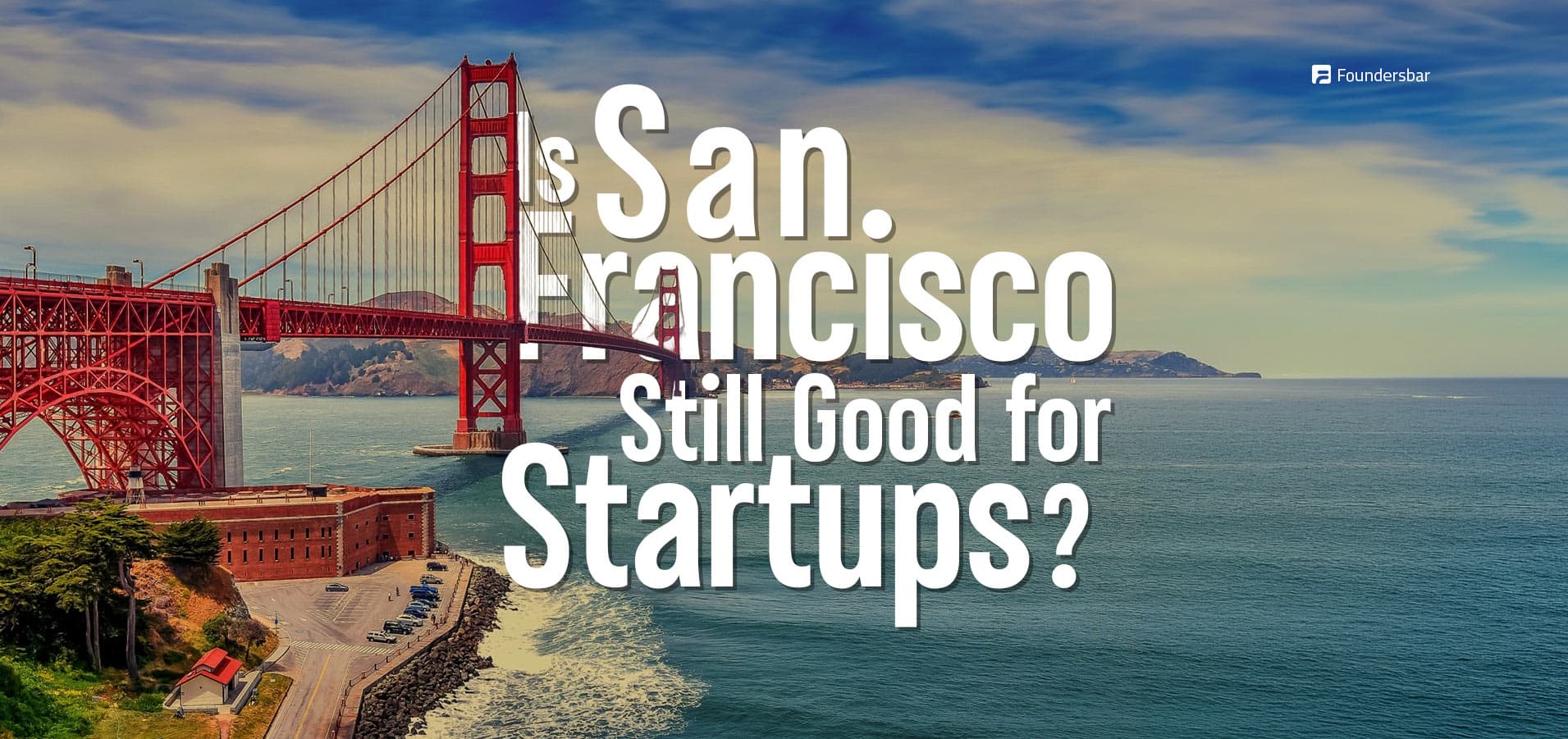
Is San Francisco Still Good for Startups in 2026?
Yes if you need venture density, AI talent, and local design partners. No if low burn matters more than that network. In 2026 San Francisco still leads U.S. cities on unicorn count, seed-deal volume, and generative-AI market cap. It is also one of the most expensive places in the country to live and hire. The city is still good. It is not good for every company.
This is the short yes/no page inside the San Francisco startup ecosystem hub. Use the hub for the map. Use this page when you need a clean answer.
Is San Francisco still the best city in the U.S. for startups?
Best for venture-scale and AI-adjacent companies. Not best for capital-efficient teams selling into markets that are not here.
What still holds in 2026:
- The Bay Area took about 45% of U.S. seed dollars in 2025. San Francisco alone closed a record 1,404 seed deals that year.
- Hurun’s 2026 index put 222 unicorns in San Francisco, first worldwide.
- Roughly 91% of generative-AI unicorn market cap sat inside a one-hour radius of the Bay Area.
- More than 22% of the city’s workforce is in tech.
What also holds: housing and fully loaded engineering sit at the top of U.S. bands. Treat SF like cheaper Austin and you blow the burn. Treat it as a market you can tap from another time zone and you miss the network.
New York wins finance and media buyers. Austin and Miami win cost and lifestyle. Boston wins deep tech and biotech depth. San Francisco still wins the compounding loop: more AI companies hire more AI people, who start more companies, who raise from funds that already live here. If you do not need that loop in the next 18 months, you are paying a luxury tax.
Full cost math: real cost of starting a company in San Francisco. Talent math: hiring engineers in San Francisco.
What changed after 2021, and what did not?
Office emptiness was real. So was the “SF is over” narrative. Neither is the 2026 story.
What changed: later-stage rounds barbelled toward AI. Consumer is thinner unless you have a real distribution wedge. Median office asking rent sat near $46 per square foot in H1 2026, high, but not 2019-peak theater for every block. FiDi is a value Class A play versus those peaks. SoMa is still the collision zone. Mission Bay is where lab-scale leases landed.
What did not change: seed is still busy, warm intros still beat cold email, and a stranger can still walk from a seed office to a Series B to an AI lab in one afternoon. The city is 47 square miles. Compactness is the product. Do not confuse San Francisco proper with “the Bay Area” in press releases. The peninsula and East Bay are overflow. The city is the density node.
Neighbourhood detail: best San Francisco neighbourhoods for startup founders
Who should still choose San Francisco?
Choose it if most of these are true:
- Your buyer can be reached here in a week.
- Your category gets SF-priced rounds: AI, applied tools, infra, fintech, and climate software, Mission Bay life science.
- You will use density: meetings, intros, comparable products in walking distance.
- You can keep personal burn in a founder house or shared place for the first stretch.
- You already know the wedge. You are not moving here to find the company.
A two-to-four-week test trip is cheaper than a 12-month lease. Sit in SoMa. Take the meetings. If the calendar stays empty, the city is not your market. If the calendar fills and the product still is not real, do not hire a local bench to hide that. Build path: how SF founders choose a tech partner and MVP development for San Francisco startups.
Who should not move to San Francisco?
Do not move if your buyers are not here, your category does not get SF-priced rounds, and a $2,000 rent jump kills the company.
Lifestyle founders and capital-efficient teams selling into the Midwest or the South usually lose more than they gain. The city rewards people who already know what they are building. It punishes people who come for the myth and network for six months.
A light SF presence plus a scoped remote or partner build is a real option. A fake HQ and a one-bedroom lease is not. Founder-house beds still run roughly $1,500-$2,500 a month. Citywide paid 1-bedrooms in 2026 cluster closer to $3,100-$3,900, with tighter neighbourhoods asking more. That gap is the whole early-stage housing decision.
Is San Francisco only good for AI companies now?
No. AI takes a disproportionate share of dollars and headlines. Fintech, climate software, developer tools, and Mission Bay life science still work. Pure consumer and me-too SaaS have a harder time at these prices.
If the product is “another wrapper on a public model” with no workflow, dataset, or buyer the labs lack, this city will be a brutal place to sell it. Buyers will compare you this month to companies that already raised nine figures.
Do I need to live in San Francisco to raise from SF investors?
Not on day one. You do need repeated in-person time. Warm intros still travel farther than cold email from another time zone. Plan multi-week trips if you will not relocate. Do not put “San Francisco” on the site and never appear.
Remote-first with a city zip code fools nobody who writes checks here. Show up for the meetings that matter, or stay honest about being elsewhere and sell into a market that matches that life.
How to run the first stretch: how to start a startup in San Francisco. Distribution once something exists: go-to-market strategy for SF startups.
Is it still worth the cost in 2026?
Worth it when density is the constraint. Not worth it when burn is the constraint.
A year of one mid-to-senior SF engineer, fully loaded, often lands in the $215k-$280k band. That is a product budget, not a default hire. If you need judgment without that seat, see fractional CTO services for early-stage SF founders.
If you are deciding whether San Francisco is the right base, mapping a vertical that actually gets density here, or ready to turn a wedge into a buildable product without lighting the raise on a local bench, start with the relevant spoke above or move to execution planning. The city still rewards speed and a hard scope. It still punishes myth-chasing. For founders who need a development-ready blueprint, a fixed-cost MVP, GTM systems, or fractional technical judgment, partners built for startups rather than enterprise process close the gap between idea and traction.
San Francisco is still good for the companies that need this market. It is a bad default for everyone else. Use the San Francisco startup ecosystem hub as the map, then decide with the cost and hiring pages open. Check eligibility at foundersbar.com.
Frequently Asked questions
Thinking about building a product or taking it to market?
Thinking about building a product or taking it to market?
Thinking about building a product or taking it to market?
Thinking about building a product or taking it to market?