Real Cost of Starting a Company in Raleigh
A practical guide to the real cost of starting a company in Raleigh in 2026, covering founder housing, engineering salaries, office space, legal expenses, MVP development, and year-one startup burn. Learn where Raleigh can offer cost advantages over major coastal hubs and how founders can use those savings to extend runway, validate their product, and build efficiently.
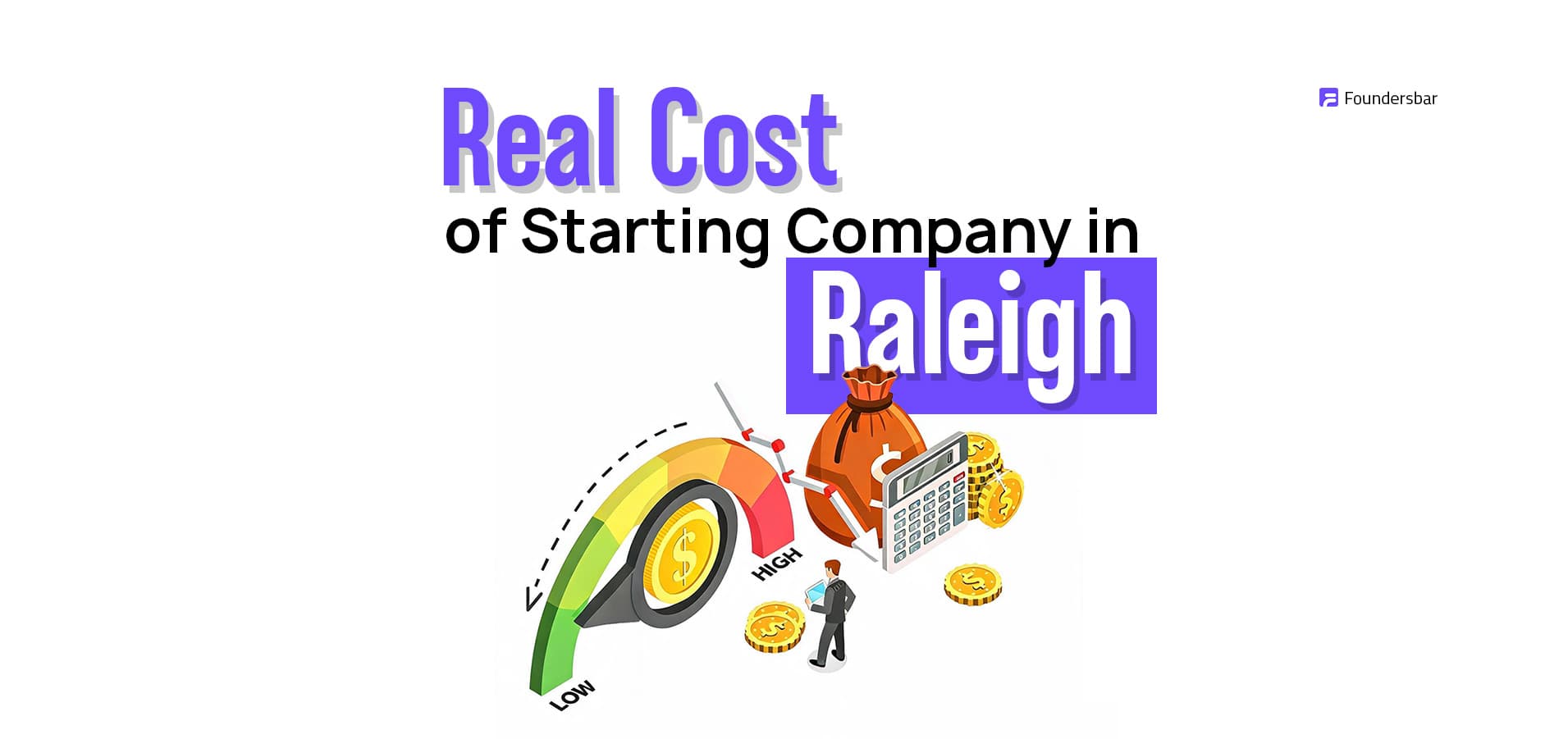
Real Cost of Starting a Company in Raleigh
A two-founder pre-seed company in Raleigh should plan for burn closer to national averages than San Francisco or Boston, often 30% to 60% lower on housing and 15% to 25% lower on fully loaded engineering. Legal, cloud, and lawyers are national-priced. Rent and salaries are the savings. Do not spend the savings on a Class A lease or a platform team.
This page is the year-one math. The city map lives on the Raleigh startup ecosystem hub. The sequence lives on how to start a startup in Raleigh.
How much does it cost to start a startup in Raleigh?
Enough to live next to the meetings, incorporate cleanly, and ship a scoped product. Not enough to copy a Bay Area org chart. The city is not cheap by Midwest standards. It is cheap by coastal-hub standards.
How much is founder housing in Raleigh?
Citywide one-bedroom averages in September 2026 sit near $1,450 to $1,504 depending on the tracker. That number includes the cheap ring. If you need to walk to downtown software meetings, plan $1,500 to $2,050. Glenwood South and new downtown inventory list higher. Durham and Cary sit in a similar band. San Francisco one-bedrooms are often double that.
Housing is strategy. Pay up only if the apartment puts you next to the buyer. Software teams that want collision should read the downtown Raleigh startup scene before they sign a 12-month unit in a quiet park of the Beltline.
What does engineering talent actually cost?
Startup cash in the Triangle is not Bay Area cash and it is not PayScale's $96k average either. That average mixes titles and companies you will not hire from. For a venture-backed software team in 2026: mid-level often $105k-$145k cash, senior $130k-$170k, staff and specialist AI or clinical-software talent $160k-$200k. Indeed's posted average sits near $118k. Levels median total comp for the metro is higher because it includes Red Hat, Cisco, Google, and equity-heavy roles. Do not offer that package at pre-seed.
Load the number. Benefits, payroll tax, equipment, and tools add 25% to 35%. A $130k engineer is a $165k-$175k line. Comp, speed, and who you can actually hire live on hiring engineers in Raleigh.
Should you lease an office in year one?
No. Newmark's mid-2026 cut put downtown Raleigh Class A asking rents around $39.50-$39.62 per square foot. City and brokerage snapshots that isolate downtown Class A have printed closer to $41. RTP / RDU Class A sits nearer $30. Durham CBD Class A sits in the mid-$30s. Seed teams that want 1,000 to 3,500 square feet will feel that on a 36-month personal guaranty.
Delay the lease. Coworking, Frontier RTP, university space, a hospital innovation desk, or the customer's site covers year one. Buy the office after the product has a pilot, not after a Twitter thread about culture.
Build vs. hire: where the real savings go
The cost advantage dies when you spend it on headcount you cannot lead. A fixed-scope MVP from a U.S. partner can cost less than one fully loaded local engineer for a year. That path is for software. It is not for wet-lab work.
Pick one path. Local hire you can manage. Fractional help. Or a committed-scope partner. Mixing all three is how a $1.5 million pre-seed becomes a nine-month company. Compare the paths on how Raleigh founders choose a tech partner and the build itself on MVP development for Raleigh startups. Teams too small for a full-time chief should price fractional CTO services for early-stage Raleigh founders instead of a $200k hire with no backlog.
When a founder needs a U.S. build partner instead of a local hiring sprint, teams such as Foundersbar sit in that gap between idea and a shippable MVP.
What does a realistic year-one burn look like?
Two working shapes. Your raise should map to one of them, not to a fantasy Series A org.
GTM spend belongs after the product exists. Do not buy ads to hide an unscoped build. The motion sits on go-to-market strategy for Raleigh startups.
What costs the same here as everywhere else?
- Delaware C-corp, cap table hygiene, and a lawyer who has closed a priced round.
- AWS, design seats, insurance, payroll software.
- A sloppy repo. Investors in this region will still ask who owns the code.
- University IP licenses if the idea came out of Duke, UNC, or NC State.
North Carolina's flat individual income tax sits near 4.5%. That helps versus California. It does not make Raleigh free. Housing and cash comp are still the lever.
How should you budget Raleigh before you move?
- Separate personal burn from company burn. Price the apartment against the meetings, not the citywide average.
- Do not sign office paper in month one.
- Price the first build before the first hire.
- Load every salary at 1.25-1.35× cash.
- Spend the coastal gap on proof: pilots, a scoped product, and in-person time, not on headcount theater.
If you do not yet have the seven-step sequence, start with how to start a startup in Raleigh and come back here to size the check.
How much is rent for a founder in Raleigh in 2026?
Citywide one-bedroom averages sit near $1,450 to $1,500. Walkable downtown and midtown units that put you next to meetings commonly run $1,500 to $2,050. Do not use the citywide average as your downtown budget.
Where founders waste the Raleigh discount
- Signing a year of downtown rent before ten buyer meetings.
- Offering Bay Area cash to a first engineer with no scope.
- Hiring a platform team because a thread said you needed one.
- Paying three vendors to build the same MVP.
- Burning GTM budget on channels you have not tested in person.
If you are deciding whether Raleigh is cheap enough to be the right base, mapping year-one burn, or ready to turn a wedge into a buildable product without lighting the raise on a local bench, start with the relevant spoke above or move to execution planning. The city still rewards a hard scope and buyers you can drive to. It still punishes myth-chasing. For founders who need a development-ready blueprint, a fixed-cost MVP, GTM systems, or fractional technical judgment, partners built for startups rather than enterprise process close the gap between idea and traction.
Raleigh is still good for the companies that need this market, including research-adjacent talent, hospital or plant buyers, enterprise software sold into the stack already here. It is a bad default for everyone else. Use the Raleigh startup ecosystem hub as the map, then decide with the cost and hiring pages open. Check eligibility at foundersbar.com.
Frequently Asked Questions
Thinking about building a product or taking it to market?
Thinking about building a product or taking it to market?
Thinking about building a product or taking it to market?
Thinking about building a product or taking it to market?