AI Adoption Strategies for Los Angeles Businesses in 2026
A practical guide for Los Angeles businesses on adopting AI without wasting budget or increasing risk. Learn how to identify high-value use cases, assess data readiness, choose between building, buying, or partnering, run focused pilots, manage AI costs and governance, and scale initiatives that deliver measurable business value.
AI Adoption Strategies for Los Angeles Businesses in 2026
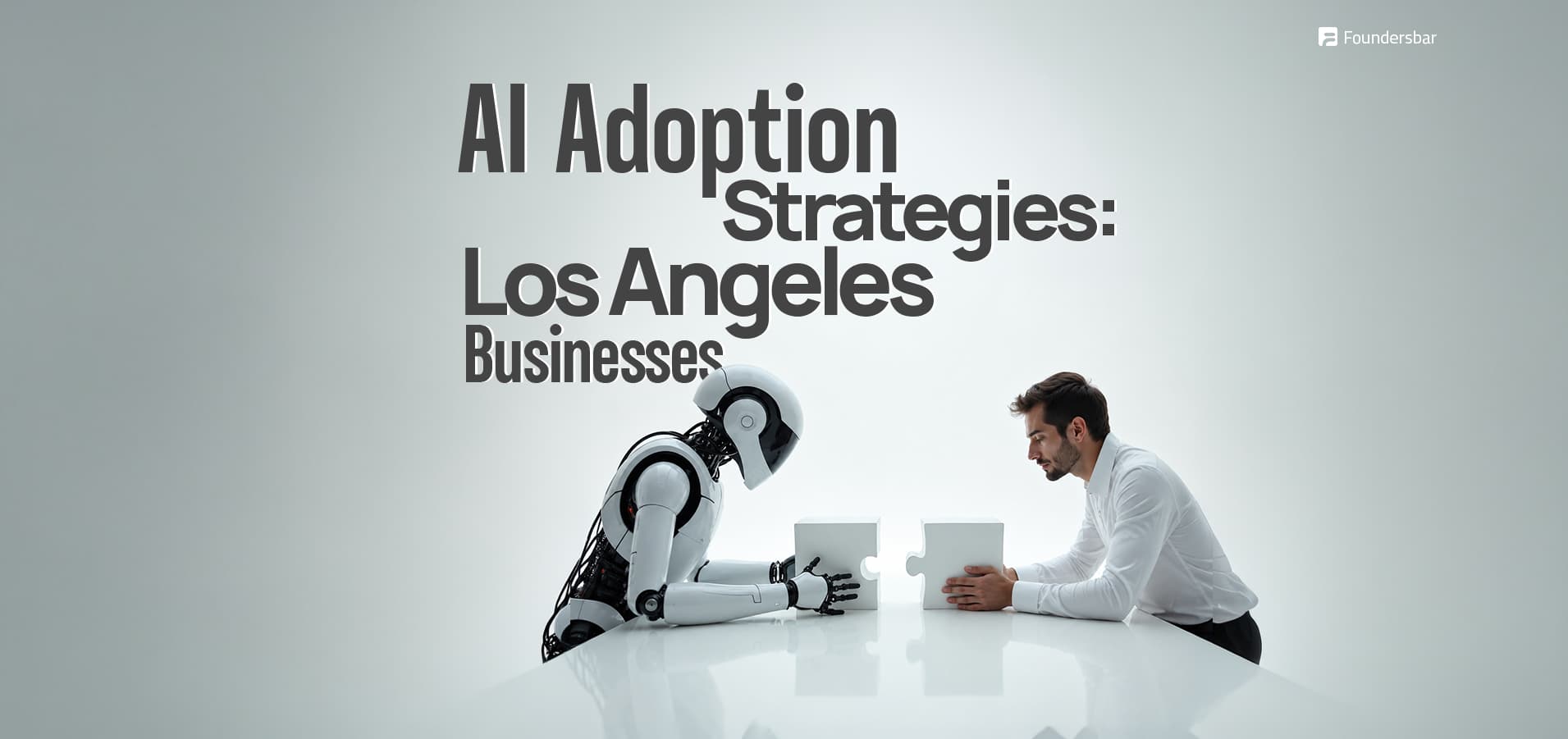
How should Los Angeles businesses approach AI adoption in 2026 to gain real competitive advantage without wasting budget or creating new risks? Successful adoption starts with clear business problems, focused pilots, strong data foundations, and realistic expectations about talent, cost, and governance. This spoke article provides practical strategies, prioritization frameworks, industry-specific opportunities, and a step-by-step approach tailored to Los Angeles companies and startups.
For the full Los Angeles startup and business ecosystem overview, industry specialties, and related resources, return to the central hub: Los Angeles Startup Ecosystem 2026.
Why Los Angeles Is Well-Positioned for AI in 2026
Los Angeles combines creative industries, advanced technical talent, major research institutions, and strong vertical markets. This mix creates distinctive AI opportunities that pure software hubs often lack.
Key advantages include:
- Deep expertise in media, entertainment, and content creation
- Aerospace, defense, and advanced manufacturing clusters
- Growing health tech and life sciences activity
- Climate and mobility innovation supported by local policy and incubators
- A large pool of both technical and domain talent from UCLA, USC, Caltech, and industry
Short Answer: LA businesses that apply AI to industry-specific problems rather than chasing generic use cases tend to see faster and more meaningful returns.
Common High-Value AI Use Cases for LA Businesses
Core Principles for Successful AI Adoption
- Start with a real business problem, not the technology
- Prioritize data readiness and quality
- Run focused pilots with clear success metrics
- Balance build, buy, and partner decisions carefully
- Address governance, security, and ethics early
- Plan for talent and change management
- Measure ROI and iterate
Step-by-Step AI Adoption Framework for LA Businesses
Identify and Prioritize Opportunities Map current pain points and processes. Score opportunities by potential value, data availability, technical feasibility, and strategic importance. Focus first on areas where AI can deliver measurable improvement within 3-6 months.
Assess Data and Infrastructure Readiness Evaluate whether you have sufficient clean, accessible data. Identify gaps in storage, integration, privacy controls, and compute resources.
Choose the Right Approach: Build, Buy, or Partner
- Buy or subscribe for proven, non-differentiating capabilities (e.g., standard customer support tools or productivity assistants).
- Partner for specialized or industry-specific solutions.
- Build only when the capability creates meaningful competitive advantage and you have (or can access) the required expertise.
Design and Run Controlled Pilots Select one or two high-potential use cases. Define success metrics in advance (cost savings, time reduction, accuracy, revenue impact). Limit scope and set clear time boundaries.
Address Talent, Governance, and Risk Decide whether to upskill existing staff, hire specialists, use fractional expertise, or rely on external partners. Establish basic policies for data use, model monitoring, bias review, and human oversight.
Scale What Works and Retire What Does Not Expand successful pilots with proper production infrastructure, monitoring, and training. Stop or redesign initiatives that fail to meet targets.
Embed AI into Ongoing Strategy and Roadmaps Connect AI initiatives to product roadmaps, operational goals, and long-term competitive positioning.
Numbered Quick-Start Checklist
- List the top 5-7 operational or customer problems in your business.
- Score each for value, data readiness, and feasibility.
- Select 1-2 pilot candidates with clear success metrics.
- Decide build / buy / partner for each pilot.
- Assign ownership and set a 60-90 day pilot timeline.
- Review results against the predefined metrics.
- Decide whether to scale, iterate, or stop.
Build vs Buy vs Partner Decisions in 2026
Short Answer: Most LA businesses should buy or partner for the majority of AI capabilities and reserve internal building for a small number of truly differentiating use cases.
Talent, Leadership, and Organizational Considerations
AI adoption often fails because of people and process issues rather than technology. Non-technical leaders need clear frameworks for evaluating proposals and partners. Technical teams need realistic roadmaps and governance. Many organizations benefit from fractional AI or technical leadership during the early stages of adoption.
Cost, ROI, and Risk Management
AI spending can escalate quickly through cloud compute, model usage, data preparation, and specialized talent. Successful organizations treat AI as an investment portfolio: they fund promising pilots, measure outcomes rigorously, and reallocate resources based on results. Common risks include data privacy issues, model drift, over-reliance on black-box systems, and cultural resistance. Addressing these early improves both outcomes and stakeholder confidence.
For broader cost discipline, see How CEOs Can Reduce IT Costs in Los Angeles.
Why Disciplined AI Adoption Matters for Los Angeles Businesses
Los Angeles companies operate in competitive, fast-moving markets where efficiency, personalization, and insight create real advantage. AI offers powerful tools, but only when applied with discipline. Organizations that start with real problems, run focused pilots, manage costs and risk carefully, and build the right mix of internal capability and external partnerships are best positioned to benefit.
Foundersbar supports Los Angeles businesses and startups with practical technical strategy, product blueprints, fixed-cost development, and fractional leadership that help teams adopt AI capabilities thoughtfully linking AI initiatives to clear business outcomes while controlling risk and cost.
Ready to develop a practical AI adoption strategy for your Los Angeles business or startup? Book a free strategy call at Foundersbar to discuss prioritization, pilot design, technical approach, or execution support tailored to your goals.
Frequently Asked Questions
Thinking about building a product or taking it to market?
Thinking about building a product or taking it to market?
Thinking about building a product or taking it to market?
Thinking about building a product or taking it to market?