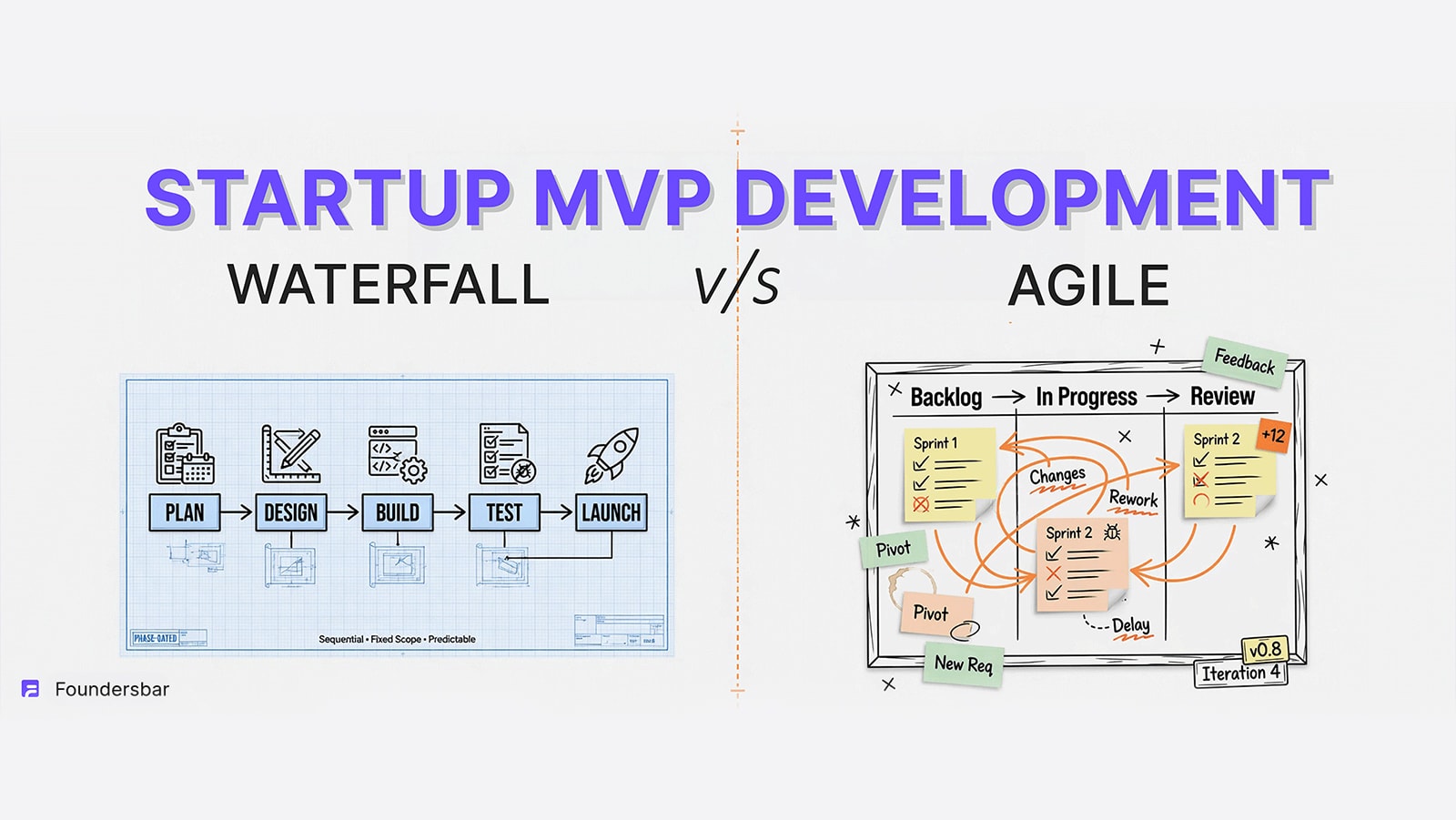
The first step every first-time founder should take before building their product: A startup product blueprint
Learn why a Product Blueprint is a critical first step for first-time founders before building a SaaS product, and how it helps reduce development costs, avoid technical mistakes, improve decision-making, and build scalable products with clear direction from day one.
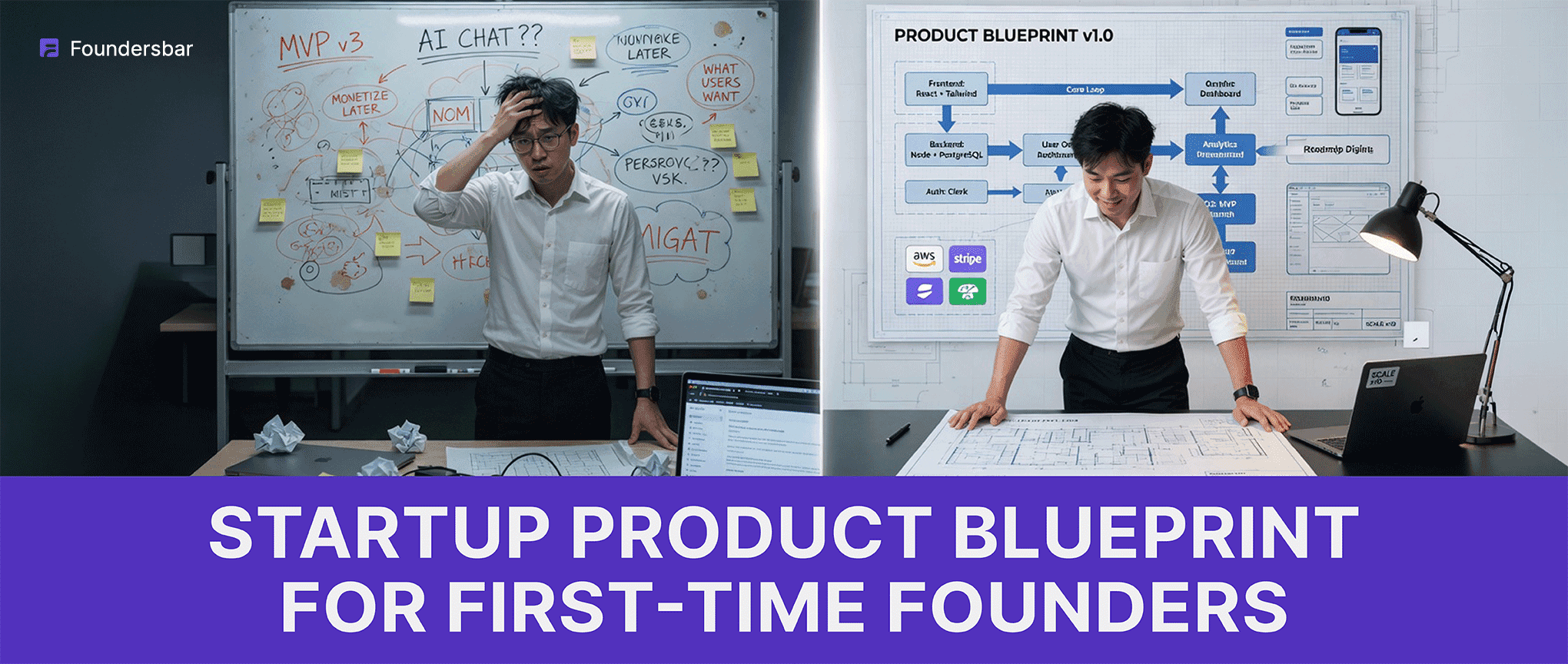
The First Step Before Building Your Startup Product
It's 11:47 PM.
You're on your third cup of coffee. Your screen is filled with Figma designs, Notion docs, and a growing list of "must-have" features that somehow keeps expanding. You've talked to three different developers this week, and every single one of them has asked the same question:
"So, what exactly are we building?"
You smile politely and say, "It's an AI-powered platform that helps busy professionals save time and stay organized." Inside, you're starting to feel that familiar knot in your stomach.
This is the moment most non-technical founders hit and it's usually right before they make one of the most expensive mistakes of their startup journey.
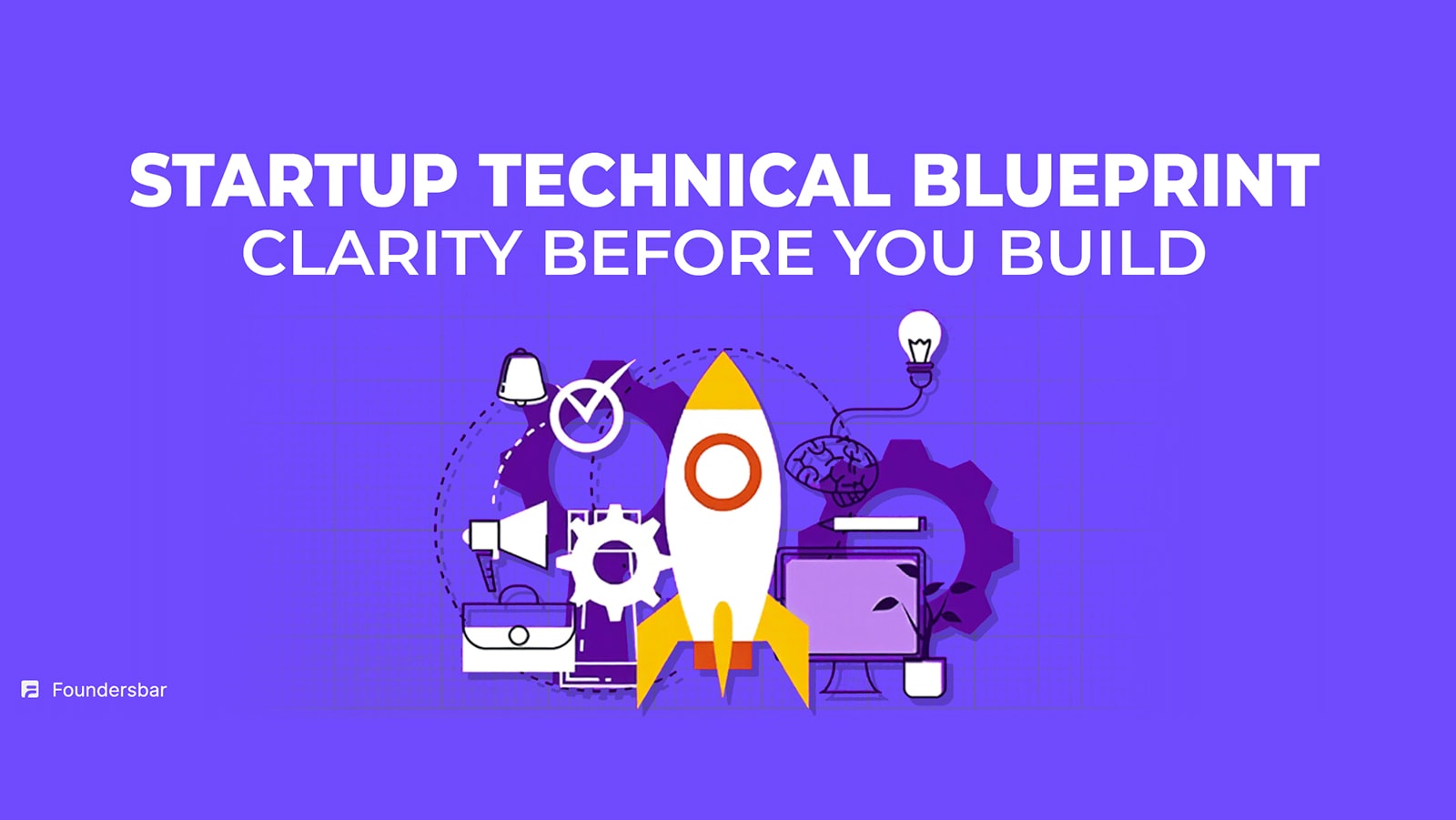
What is a startup product blueprint?
Think of a Product Blueprint as the architectural plans for your product. Maybe think of it something like super detailed than product requirements document or product plan.
Before any construction crew shows up to build your dream house, a smart architect draws up detailed blueprints. They figure out the foundation, the wiring, the plumbing, how everything connects, and what materials you'll need. They spot potential problems before anyone starts hammering.
A startup product blueprint does the exact same thing for your product, except instead of pipes and beams, we're talking about:
- How your system will actually work
- What technology stack makes sense (and what doesn't)
- How it will scale when thousands of users show up
- What the biggest technical risks are
- How long it should realistically take to build
- How much it should actually cost
- Or even with a tight budget, what features can realistically be built?
Without it? You're basically asking a construction crew to "just start building" with no plans. [1]
Why most non-tech founders skip this step (and regret it later)
Here's the honest truth:
Most first-time founders are so excited to "start building" that they skip the planning phase entirely.
They think:
- "I'll just hire a developer and figure it out as we go"
- "We can always refactor later"
- "It's just an MVP, it doesn't need to be perfect"
Again, its understandable. You want momentum. You want to feel like you're making progress.
Sitting around "planning" feels like procrastination.
But here's what actually happens when you skip the proper product blueprint planning, You end up with:
- A product that's way more expensive than it needed to be
- Technical debt that haunts you for years
- Constant rework because decisions were made without a clear architecture [2]
- A codebase that only one developer understands (bus factor alert!)
- Months of delays because nobody knew what they were actually building
Sound familiar? You're not alone. This is the silent startup killer that nobody talks about until it's too late.
The real cost of skipping the blueprint
Let's talk numbers, because US founders love numbers.
According to industry data:
- The average failed MVP costs founders between $50,000 - $150,000 in wasted development [3]
- Most first-time founders spend 3-6 months longer than necessary because they didn't plan properly [4]
- Technical debt created in the first 3 months of a project often costs 5-10x more to fix later
But the real cost isn't just money. It's:
- Lost momentum
- Missing the market timing window completely while competitors launch first
- Burned-out founders
- Shattered confidence
- The slow death of what could have been a great product
The founders who win? They treat the startup product blueprint phase as the most important part of the entire build process and not the boring part they want to rush through.
What a good startup product blueprint actually includes
A proper startup product blueprint isn’t some 200-page technical document written in alien language. Even a well-written Product Requirements Document (PRD) is still just a high-level summary it doesn’t capture the full technical architecture, system design, risks, scalability plan, and implementation details your developers actually need to build the right product.
It's a clear, strategic document that answers the questions that actually matter.
Here's what a good one covers:
- Product Architecture Overview How the whole system fits together. Think of it as the bird’s-eye view of your product.
- Recommended Tech Stack Not just "use React and Node" but why those technologies make sense for your specific product and goals.
- System Design & Data Flow How information moves through your product. Where data lives. How everything connects.
- Scalability Plan What happens when you go from 100 users to 10,000 and then 100K? (Spoiler: most founders don't think about this until it's a crisis.)
- Technical Risks & Mitigation What could go wrong, and how to prevent it. This alone can save you tens of thousands of dollars.
- Development Roadmap A realistic timeline broken into phases, with clear milestones. No more "it'll be done when it's done."
- Cost & Resource Estimates How much it should actually cost and how long it should take based on reality, not hope.
How long does it actually take to get a startup product blueprint?
A proper Product Blueprint isn’t something you can whip up in an afternoon. Good ones usually take 1 to 3 weeks, depending on how complex your product is.
Why does it take time? Because a great blueprint isn’t just an AI generated document. It’s the result of deep thinking, asking the right questions, and making smart trade-offs. Rushing this part is exactly how founders end up with expensive mistakes later.
Think of it like this: Would you rather spend a couple of weeks planning properly or spend months (and a lot more money) fixing problems you could have avoided?
Why smart founders get a blueprint before they write a single line of code?
Here's what changes when you get a startup product blueprint early:
- You stop guessing and start building with clarity
- You avoid the $50k+ mistakes most founders make
- You can actually have intelligent conversations with developers
- You know exactly what you're paying for (and what you're not)
- You launch faster because you're not constantly redoing work
- You build something that can actually scale when you need it to
The founders who get this right don't necessarily have better ideas. They just make better decisions earlier in the process.
Final verdict: The blueprint isn't optional anymore
Most founders don’t fail because their ideas are bad. They fail because they hurry into building the idea instead of a strategic process.
The ones who succeed? They plan before they build. They get clear on what they’re actually creating, how it should work, and what it should cost before writing a single line of code.
A startup product blueprint isn’t about slowing things down. It’s about understanding the basics right and moving fast in the right direction. When was the last time someone built a home without a floor plan? Or when was the last time someone went on a long road trip without Google Maps or any plan?
The founders who win aren’t the ones who move the fastest. They’re the ones who move with clarity.
Y Combinator. (2025). The Importance of Technical Planning Before Building. Link
Harvard Business Review. (2024). Why Most MVPs Fail And How Smart Founders Avoid lt. Link
CB Insights. (2025). The Top Reasons Startups Fail. Link
Startup Genome. (2025). Global Startup Ecosystem Report. Link
Learn how a startup turned a rough idea into a validated MVP using a product blueprint Link
Thinking about building a product or taking it to market?
Thinking about building a product or taking it to market?
Thinking about building a product or taking it to market?
Thinking about building a product or taking it to market?