Startup Technical Blueprint: Avoid Costly MVP Mistakes
Learn how first-time founders lose time and money by building MVPs without a clear technical blueprint, and why proper planning, scope clarity, and product strategy can save startups from costly mistakes and failed launches.
A founder spent $100k and 15 months building an MVP, and ended up with nothing usable.
Let me tell you a story.
A few years ago, I met a founder. let's call him Alex. Super smart guy. Had what he thought was a killer idea: a mobile tool that would help busy professionals manage their time better. He was really excited about his first tech project.
He did what most first-time founders do:
- Sketched some screens in Figma
- Wrote a long list of features
- Found a development agency that promised to "build it fast and cheap"
- Signed a contract and wired the first payment 12 months and $87,000 later, he got something.
It kind of worked. But it was slow. Buggy. The design felt off. The features didn't work the way he imagined. And worst of all? It didn't solve the actual problem his target users cared about.
He spent another 3 months trying to fix it. Then another $20k. Eventually, he shut it down.
When I asked him what happened, he said something I'll never forget:
"I thought I was hiring professionals who would take ownership. Turns out, they never signed a proper scope, never really understood what I wanted, and just built whatever they felt like”
The expensive mistake most founders make
Alex's story isn't rare. It's actually incredibly common.
Most non-technical founders make the same mistake:
They jump straight into building without ever getting clear on what they're actually building.
They think:
- “They’ll take care of everything professionally and I don’t need to worry about scopes or processes”
- “I’ll just explain it to the developers and they’ll figure it out”
- “They’ll take the minimal time possible and deliver fast”
- “They’ll make sure I own the code and everything is properly documented”
And then reality hits.
The product takes twice as long as expected. Costs three times more than budgeted. And when it finally launches? Crickets. Because it didn't actually solve the problem the way they thought it would.
What Alex should have done differently
If Alex could go back in time, here's what he would have done instead:
1. Get a startup technical blueprint before hiring anyone
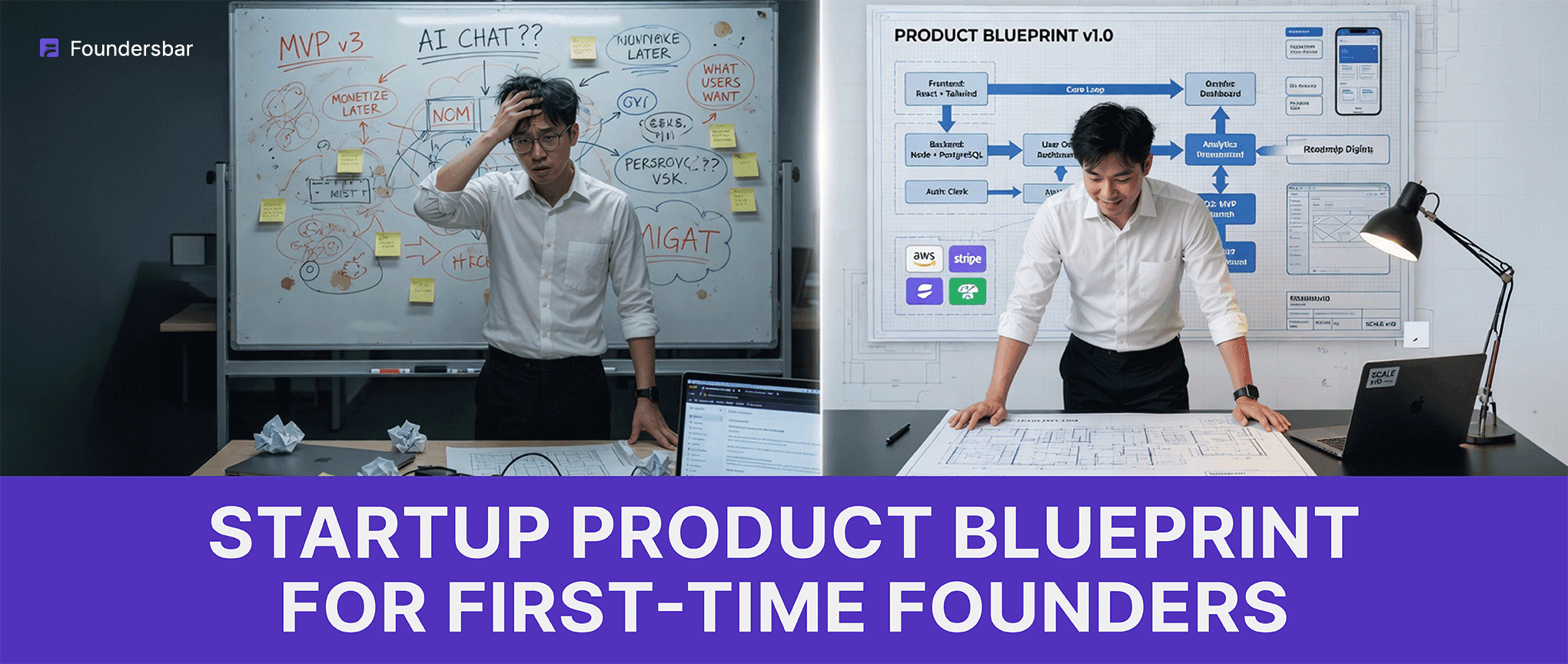
Instead of jumping straight into development, he would have created (or hired someone to create) a clear startup technical blueprint or a detailed product requirements document. This would have answered:
- How long will it realistically take to build the product?
- What’s the expected cost to build it?
- What legal documents are needed (SOW, NDA, MSA, IP Assignment) and when should they be signed?
- What technology stack should be used, and how will it scale?
- What are the biggest technical risks (security, performance, etc.)?
- What’s the proper timeline with clear milestones?
2. Know exactly what he was paying for
With a proper startup technical blueprint, Alex would have Known exactly what to expect from the professionals for each milestones rather than being in the dark for a year or so and get introduces to a mediocre product. Alex would have known exactly what the developers were supposed to deliver and what they weren’t. No more vague scope. No more surprise invoices or unexpected delays.
3. Launch fast and iterate
Instead of spending 15 months (and $107k) on a product that could have been built in just 5-6 months, Alex would have launched much earlier and at a fraction of the cost. He would have gotten real user feedback early and iterated based on what the market actually needed.
The hard truth
Here's what nobody tells you:
The most expensive part of building a product isn't the blanket statement - development cost.
It's the time and money you waste when you build the wrong thing.
Alex didn’t lose $107k because his idea was bad. He lost it because he trusted the professionals to guide him and they didn’t. As a non-technical founder, he did his part by clearly explaining what he wanted.
What I wish more founders knew
If you're a non-technical founder planning to build your first product, here's what I want you to remember:
- A startup technical blueprint isn't optional. It's the difference between building something useful and burning through your savings. Its more than a product plan or even product requirements document.
- The cheapest way to build is to build the right thing the first time.
- You don't need to be technical to build a great product. You just need to plan properly before you start.
The founders who win aren't the ones who move the fastest - they start with a startup technical blueprint.
Want to avoid Alex's mistake?
If you're planning to build your first MVP and want to do it the smart way, a startup technical blueprint is the best first step you can take.
It'll help you:
- Get everyone on the same page so the founder’s vision and the developers’ understanding are perfectly aligned
- Avoid expensive technical mistakes and rework
- Know exactly what to expect (timeline, milestone, cost, and scope)
- Launch faster with the product you actually envisioned
- Avoid opportunity cost by hitting the market at the right time instead of missing the window
This article is based on real founder stories (names changed for privacy). The goal is to help non-technical founders avoid the expensive mistakes that so many of us have made.
Thinking about building a product or taking it to market?
Thinking about building a product or taking it to market?
Thinking about building a product or taking it to market?
Thinking about building a product or taking it to market?