Top strategies for effective startup software development
Unlock your startup's potential with effective software development strategies. Discover proven methods to enhance efficiency, boost collaboration, and ensure success.

Understanding the software development lifecycle
The software development lifecycle (SDLC) is a structured process that outlines the steps required to develop, deploy, and maintain software. Understanding the SDLC is crucial for startups aiming to develop efficient and effective software solutions. This process includes several distinct phases: planning, analysis, design, implementation, testing, deployment, and maintenance. Each phase has its own set of activities and deliverables, which collectively ensure the creation of high-quality software.
Planning is the first phase, where the project scope is defined, and feasibility studies are conducted. This phase sets the foundation for the entire project by identifying the problem that the software aims to solve, the target audience, and the project's objectives. Proper planning helps in allocating resources effectively and setting realistic timelines and budgets. This phase also involves risk assessment and management strategies to mitigate potential issues that may arise during development.
Following planning, the analysis phase involves gathering detailed requirements from stakeholders. This phase is critical as it helps in understanding user needs and expectations. Techniques such as interviews, surveys, and workshops are commonly used to gather requirements. Once the requirements are well-defined, the design phase begins. Here, the software architecture is created, ensuring that the system meets the specified requirements. The design phase also includes creating data models, user interfaces, and system interfaces, which serve as blueprints for the implementation phase
Defining clear objectives and goals
Defining clear objectives and goals is essential for the success of any startup software development project. Objectives provide direction and purpose, while goals offer measurable outcomes that the team can strive to achieve. Clear objectives and goals help in aligning the team's efforts, ensuring that everyone is working towards a common purpose. They also provide a basis for evaluating the project's progress and success.
To define clear objectives and goals, it is important to involve all relevant stakeholders, including team members, clients, and end-users. This collaborative approach ensures that the objectives are aligned with the needs and expectations of the users. Additionally, objectives should be Specific, Measurable, Achievable, Relevant, and Time-bound (SMART). This framework helps in creating well-defined and realistic objectives that can be effectively tracked and measured.
Once the objectives are defined, it is crucial to communicate them clearly to the entire team. This ensures that everyone understands the project's purpose and what is expected of them. Regularly reviewing and revising objectives and goals can help in adapting to any changes that may occur during the development process. This flexibility ensures that the project remains on track and continues to meet the needs of the users and stakeholders
Building a Minimum Viable Product (MVP)
Building a Minimum Viable Product (MVP) is a strategic approach that allows startups to validate their ideas with minimal resources. An MVP is a simplified version of the product that includes only the core features necessary to solve the primary problem. This approach helps in testing the product's viability in the market without investing significant time and resources in developing a fully-featured product.
The primary advantage of building an MVP is that it allows startups to gather feedback from real users early in the development process. This feedback is invaluable as it provides insights into the users' needs, preferences, and pain points. Based on this feedback, the development team can make informed decisions about which features to prioritize and how to improve the product. This iterative process ensures that the final product is well-aligned with the users' expectations and provides maximum value.
To build an effective MVP, it is important to focus on solving the core problem that the product aims to address. This requires a deep understanding of the target audience and their needs. The development team should prioritize features that provide the most value to the users while keeping the product simple and easy to use. Additionally, it is important to set clear success criteria for the MVP, such as user engagement metrics, feedback scores, and conversion rates. These criteria help in evaluating the MVP's performance and making data-driven decisions for future development.
Choosing the right technology stack
Choosing the right technology stack is a critical decision that can significantly impact the success of a startup software development project. The technology stack refers to the combination of programming languages, frameworks, libraries, and tools used to build the software. The right technology stack can enhance the development process, improve the software's performance, and ensure scalability and maintainability.
When selecting a technology stack, it is important to consider factors such as the project's requirements, the team's expertise, and the long-term goals of the product. For example, if the project requires real-time data processing, technologies that support high-speed data handling and low latency may be preferred. Similarly, if the team has expertise in a particular programming language or framework, it may be beneficial to leverage that expertise to ensure efficient development.
Another important consideration is the technology's community support and ecosystem. Technologies with large and active communities often have extensive documentation, tutorials, and third-party libraries, which can significantly reduce development time and effort. Additionally, these technologies are more likely to receive regular updates and security patches, ensuring that the software remains secure and up-to-date.
It is also important to consider the scalability and maintainability of the technology stack. Startups should choose technologies that can easily scale to accommodate growing user bases and evolving requirements. Additionally, the chosen technologies should facilitate easy maintenance and updates, ensuring that the software remains reliable and performant over time. By carefully evaluating these factors, startups can select a technology stack that aligns with their project goals and sets the foundation for successful software development.
Agile methodology in startup software development
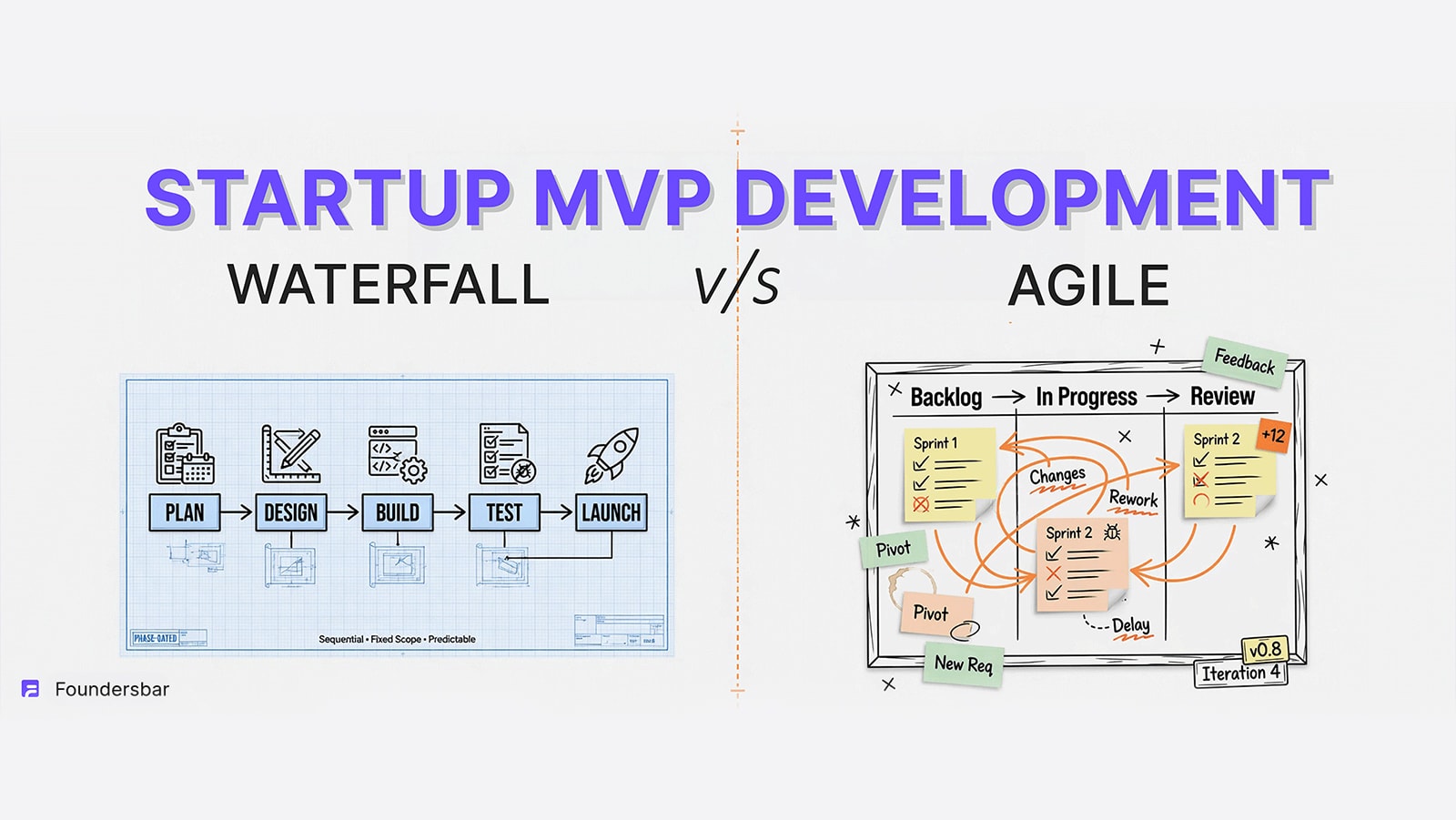
Agile methodology is a popular approach in startup software development due to its flexibility, iterative nature, and focus on collaboration and customer feedback. Agile emphasizes delivering small, incremental improvements to the product, allowing teams to adapt to changes and continuously improve the software based on user feedback. This approach is particularly beneficial for startups, where requirements and market conditions can change rapidly.
One of the core principles of Agile methodology is iterative development, where the project is divided into small, manageable chunks called iterations or sprints. Each iteration involves planning, development, testing, and review, allowing the team to deliver a working version of the software at the end of each sprint. This iterative approach ensures that the team can quickly respond to feedback and make necessary adjustments, leading to a more refined and user-centric product.
Collaboration and communication are also central to Agile methodology. Agile teams typically hold regular meetings, such as daily stand-ups, sprint planning, and retrospectives, to ensure that everyone is aligned and aware of the project's progress and any potential obstacles. These meetings foster a transparent and collaborative environment, where team members can share ideas, address challenges, and make collective decisions. This collaborative approach helps in leveraging the team's diverse skills and expertise, leading to more innovative and effective solutions.
Agile methodology also emphasizes the importance of customer feedback and involvement. By regularly delivering working versions of the software, Agile teams can gather feedback from users and stakeholders, ensuring that the product meets their needs and expectations. This customer-centric approach helps in building a product that provides real value to the users, increasing the likelihood of success in the market. Overall, Agile methodology offers a flexible and adaptive framework that aligns well with the dynamic nature of startup software development
Importance of user-centered design
User-Centered Design (UCD) is a design philosophy that prioritizes the needs, preferences, and behaviors of the end-users throughout the development process. In startup software development, UCD is essential for creating products that are not only functional but also intuitive and enjoyable to use. By focusing on the users, startups can build software solutions that provide real value and foster user satisfaction and loyalty.
The UCD process involves several key activities, including user research, prototyping, and usability testing. User research is the first step, where the development team gathers insights into the users' needs, goals, and pain points. Techniques such as interviews, surveys, and observations are commonly used to gather this information. These insights help in understanding the users' context and creating personas that represent different user groups. These personas serve as a reference throughout the development process, ensuring that the design decisions align with the users' needs.
Prototyping is the next step, where the team creates low-fidelity and high-fidelity prototypes of the software. Prototypes are simplified versions of the product that allow the team to explore different design concepts and gather feedback from users. This iterative process helps in refining the design and identifying any usability issues early in the development process. By involving users in the prototyping phase, the team can ensure that the final product is user-friendly and meets their expectations.
Usability testing is an essential component of UCD, where real users interact with the software to identify any usability issues and areas for improvement. During usability testing, users are asked to complete specific tasks while the team observes their interactions and gathers feedback. This process helps in identifying any challenges or frustrations that users may face while using the software. Based on this feedback, the team can make necessary adjustments to improve the user experience. By prioritizing user-centered design, startups can create software solutions that are not only functional but also delightful to use, leading to higher user satisfaction and engagement.
Effective team collaboration and communication
Effective team collaboration and communication are vital for the success of startup software development projects. In a startup environment, where resources are often limited and timelines are tight, seamless collaboration and clear communication can make a significant difference in the project's outcome. A cohesive and well-communicated team can work more efficiently, overcome challenges more effectively, and deliver high-quality software solutions.
One of the key strategies for fostering effective collaboration is to create a transparent and inclusive environment where team members feel valued and heard. This involves encouraging open communication and active participation from all team members, regardless of their roles or seniority. Regular meetings, such as daily stand-ups, sprint planning, and retrospectives, provide opportunities for team members to share updates, discuss challenges, and collaboratively make decisions. These meetings help in keeping everyone aligned and informed about the project's progress and any potential obstacles.
Using collaboration tools and technologies can also enhance team communication and collaboration. Tools such as project management software, instant messaging platforms, and version control systems can streamline workflows and facilitate real-time communication. For example, project management tools like Jira or Trello enable teams to track tasks, assign responsibilities, and monitor progress. Instant messaging platforms like Slack or Microsoft Teams allow for quick and informal communication, reducing the need for lengthy email threads. Version control systems like GitHub or GitLab enable team members to collaborate on code, track changes, and manage versions effectively.
Another important aspect of effective collaboration is fostering a culture of trust and mutual respect. Team members should feel comfortable sharing their ideas, providing feedback, and constructively challenging each other. This collaborative culture encourages innovation and creativity, leading to more effective problem-solving and better software solutions. Additionally, recognizing and celebrating the team's achievements can boost morale and motivation, further enhancing collaboration and productivity. By prioritizing effective team collaboration and communication, startups can create a positive and productive work environment that drives success
Testing and quality assurance best practices
Testing and quality assurance (QA) are critical components of the software development process, ensuring that the final product is reliable, functional, and free of defects. For startups, implementing effective testing and QA practices is essential to deliver high-quality software solutions that meet user expectations and build trust in the product. A robust QA process can identify and address issues early, reducing the risk of costly errors and rework later in the development cycle.
One of the best practices in testing and QA is to adopt a comprehensive testing strategy that covers different types of testing, including unit testing, integration testing, system testing, and user acceptance testing (UAT). Unit testing involves testing individual components or modules of the software to ensure they function correctly in isolation. Integration testing checks how different modules interact and work together, identifying any issues that may arise from their integration. System testing evaluates the entire system's functionality and performance, ensuring that it meets the specified requirements. UAT involves real users testing the software to ensure it meets their needs and expectations.
Automated testing is another best practice that can significantly enhance the efficiency and effectiveness of the QA process. Automation tools can execute repetitive and time-consuming tests quickly and accurately, freeing up QA teams to focus on more complex and exploratory testing. Automated testing is particularly useful for regression testing, where previously tested functionalities are re-tested to ensure they still work correctly after changes or updates. By incorporating automated testing into the QA process, startups can improve test coverage, reduce testing time, and increase the reliability of their software.
Continuous integration and continuous deployment (CI/CD) are also important practices in modern software development. CI involves automatically integrating code changes into a shared repository multiple times a day, followed by automated testing to detect any issues early. CD extends this process by automatically deploying the tested code to production environments. CI/CD pipelines enable teams to deliver updates and new features more frequently and reliably, reducing time-to-market and ensuring that users receive the latest improvements promptly. By adopting CI/CD practices, startups can enhance the agility and responsiveness of their development process, ensuring that their software remains competitive and meets user needs.
Scaling your software solution
Scaling a software solution is a critical consideration for startups aiming to grow and accommodate an increasing number of users and evolving requirements. Effective scaling ensures that the software remains performant, reliable, and maintainable as user demand and data volume increase. Startups need to plan for scalability from the outset to avoid potential bottlenecks and challenges that can arise as the user base grows.
One of the key strategies for scaling software is to design the architecture with scalability in mind. This involves adopting a modular and decoupled architecture, where different components of the software can be scaled independently. For example, microservices architecture is a popular approach that divides the software into small, independent services that can be developed, deployed, and scaled separately. This modular approach allows startups to scale specific parts of the system based on demand, improving resource utilization and reducing the risk of system-wide failures.
Another important aspect of scaling is optimizing the performance and efficiency of the software. This involves identifying and addressing performance bottlenecks, such as slow database queries, inefficient algorithms, and resource-intensive processes. Techniques such as caching, load balancing, and database optimization can significantly enhance the software's performance and scalability. Additionally, leveraging cloud-based infrastructure and services can provide the flexibility and scalability needed to accommodate varying workloads and user demand. Cloud platforms like AWS, Azure, and Google Cloud offer a range of scalable services, including computing, storage, and databases, that can be easily scaled up or down based on usage.
Monitoring and maintaining the software's performance is also crucial for effective scaling. Implementing robust monitoring and logging solutions can provide real-time insights into the system's health and performance, allowing the team to proactively identify and address issues before they impact users. Tools like Prometheus, Grafana, and ELK stack can help in monitoring key performance metrics, such as response times, error rates, and resource utilization. By continuously monitoring the software and making data-driven decisions, startups can ensure that their software remains scalable and performant, providing a seamless experience for users as the business grows.
Conclusion and future trends in software development
In conclusion, effective startup software development requires a strategic approach that encompasses understanding the software development lifecycle, defining clear objectives, building a minimum viable product, choosing the right technology stack, adopting Agile methodology, prioritizing user-centered design, fostering effective team collaboration, implementing robust testing and quality assurance practices, and planning for scalability. By following these strategies, startups can enhance their efficiency, boost collaboration, and deliver high-quality software solutions that meet user needs and drive business success.
Looking ahead, several emerging trends are set to shape the future of software development. One such trend is the increasing adoption of artificial intelligence (AI) and machine learning (ML) technologies. AI and ML can enhance various aspects of software development, including automating repetitive tasks, optimizing performance, and providing predictive analytics. Startups can leverage AI and ML to create more intelligent and adaptive software solutions that offer personalized experiences and insights to users.
Another significant trend is the rise of low-code and no-code development platforms, which enable users to create software applications with minimal coding knowledge. These platforms democratize software development, allowing non-technical users to contribute to the development process and accelerating the time-to-market for new applications. For startups, low-code and no-code platforms can provide a cost-effective and efficient way to develop and iterate on their software solutions.
The increasing focus on cybersecurity is also shaping the future of software development. As cyber threats continue to evolve, startups must prioritize security in their development processes to protect their software and user data. This involves adopting secure coding practices, conducting regular security assessments, and staying updated with the latest security trends and technologies. By integrating security into the development lifecycle, startups can build more resilient and secure software solutions.
In summary, the future of software development is set to be driven by advancements in AI and ML, the rise of low-code and no-code platforms, and an increased focus on cybersecurity. By staying informed about these trends and continuously evolving their strategies, startups can navigate the dynamic landscape of software development and achieve long-term success.
Thinking about building a product or taking it to market?
Thinking about building a product or taking it to market?
Thinking about building a product or taking it to market?
Thinking about building a product or taking it to market?