
3D streaming feasibility study
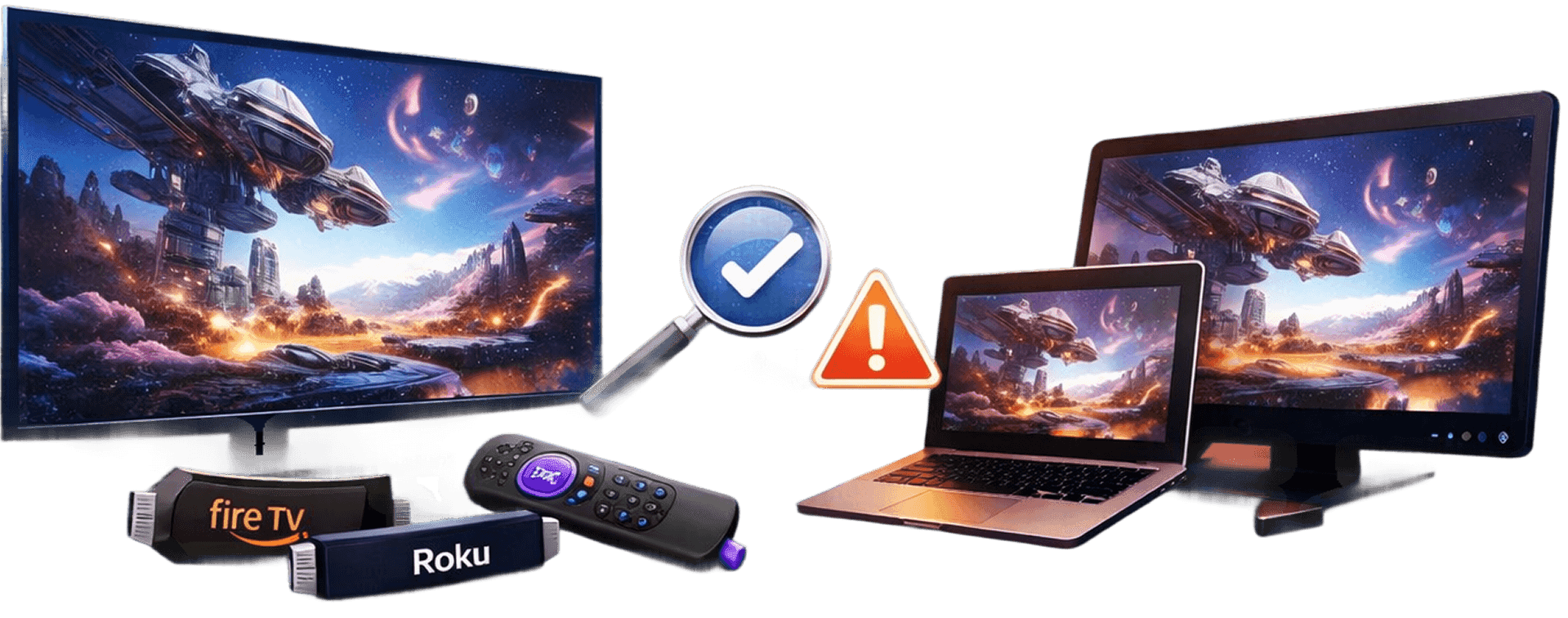
A feasibility-led engagement to validate whether immersive 3D streaming could realistically run across web and TV platforms like Fire TV and Roku. The study focused on technical constraints, platform compatibility, and performance limits to help the team make an informed, risk-aware decision before committing to full product development.


Overview
An animation startup wanted to explore whether 3D video experiences could work across mainstream platforms like TV and web. The idea was ambitious.But before building the product, they needed clarity. The goal was simple, Understand what is actually feasible - not just possible.
The founders situation
The team had a strong product vision and creative direction. They wanted to build immersive 3D viewing experiences across platforms like Amazon Fire TV, Roku, and web.
But the decision to move forward required technical validation. Without clarity, they risked investing time and capital into a direction that might not work in real-world conditions.
Challenges
1.Cross-platform complexity
Supporting TV and web platforms with different capabilities and playback environments
2.Feasibility vs possibility
Separating what could theoretically work from what is practically deliverable
3.Device limitations
Working within constraints of consumer devices with limited rendering control
4.High-stakes decisions
Business direction depended on early clarity before further investment
Our approach
1.Feasibility-led POC
Structured the engagement as a focused proof-of-concept and validation study
2.Clear expectation setting
Aligned early that findings may challenge the original product vision
3.Platform-focused evaluation
Tested 3D rendering feasibility across TV platforms and web environments
4.Business-aligned insights
Translated technical findings into clear product and strategy direction
What we delivered
- Feasibility study across TV platforms and web environments
- POC-based validation of 3D streaming and rendering assumptions
- Identification of platform constraints and technical limitations
- Structured insights on practical feasibility and product direction
- Clear guidance to support informed product and business decisions
Outcome
Foundersbar delivered the project ahead of schedule and under budget, completing it in 5 months instead of the planned 6 months, while optimizing costs from $100K to $80K.
- Provided clear technical validation before major product investment
- Identified key limitations in the original 3D streaming approach
- Helped the team avoid costly development in an unviable direction
- Enabled a shift in product strategy based on real-world feasibility
Grant support
This engagement was made possible through Foundersbar’s partnership with the Koffman Southern Tier Incubator in New York, associated with Binghamton University. As an incubator graduate, the startup was eligible for grant funding of up to $10,000. This project, valued at $7,000, was fully delivered under this grant support.
Conclusion
This engagement highlights the importance of validating technical feasibility before committing to product development. Instead of moving forward based on assumptions, the startup gained clear, grounded insights into what was realistically achievable across target platforms. Even though the findings did not fully support the original vision, the outcome was successful. The team was able to adjust its direction early, avoid unnecessary investment, and move forward with greater confidence and clarity.
Feasibility studies like this one are the cornerstone of our market validation service, giving founders a risk-informed decision before a dollar of development spend.
Confidentiality & approval: Client and product names have been redacted on request.
This case study was reviewed and approved by the client in this redacted form before publication.
FAQs

A feasibility study evaluates whether a product idea can be realistically built and delivered. It helps identify technical limitations, platform constraints, and practical challenges before committing to full development.
Technical validation helps avoid costly mistakes by confirming what is actually achievable. It ensures that product decisions are based on real-world constraints rather than assumptions.
This is typically done through a proof-of-concept (POC), where key features are tested on target platforms. It helps assess performance, compatibility, and user experience before scaling development.
Common challenges include differences in device capabilities, performance limitations, platform restrictions, and maintaining a consistent experience across environments like web, mobile, and TV.
A startup should conduct a feasibility study early in the product lifecycle, especially when exploring new technologies or complex ideas. It helps validate direction before investing significant time and resources.