AI Product Development in Denver: Costs, Teams & Technology Choices
A practical guide to AI product development for Denver startups, covering AI MVP costs, team requirements, technology choices, ongoing infrastructure and inference expenses, and scaling strategies. Learn how to build reliable AI products while controlling costs and choosing the right balance of engineering talent, AI tools, and technical leadership.
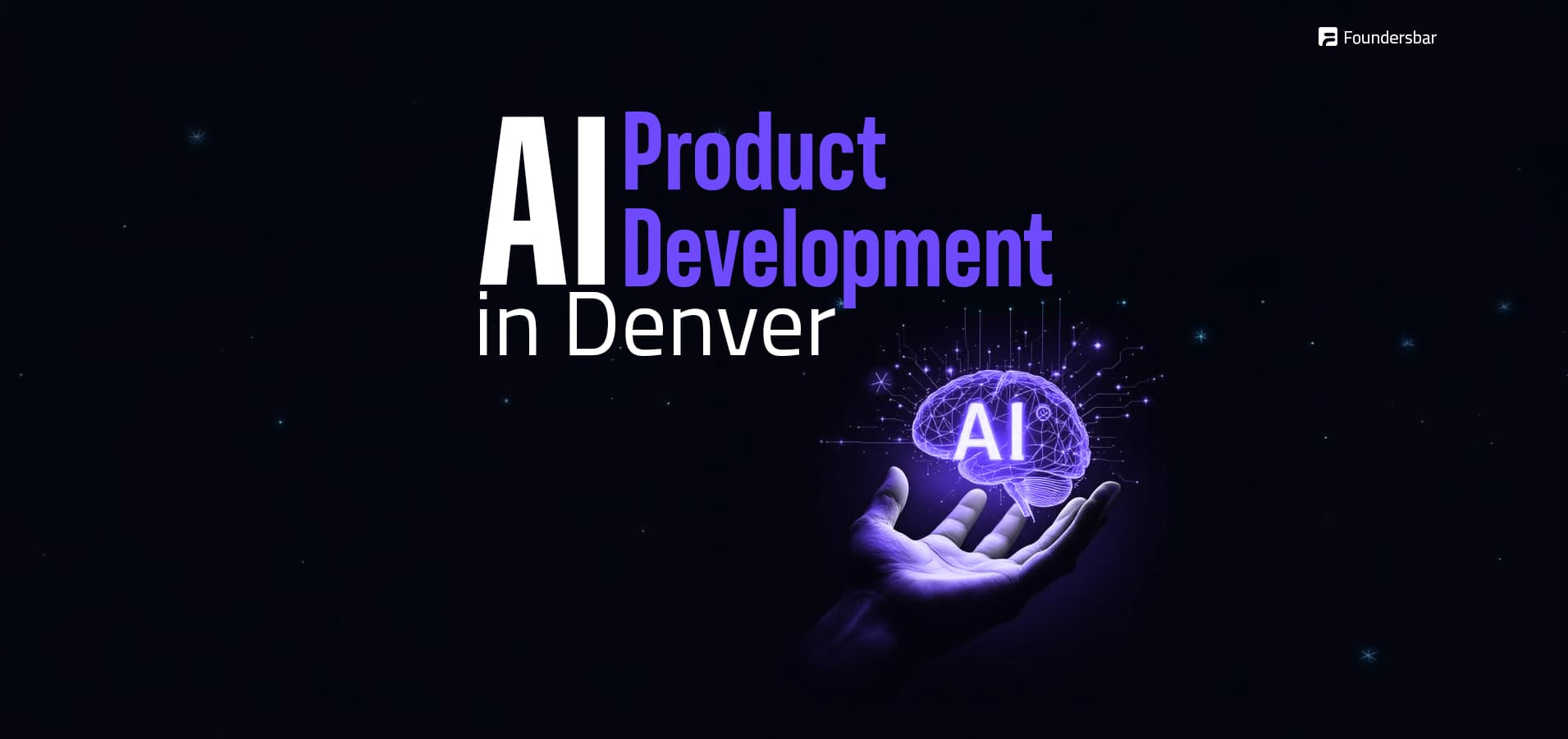
AI Product Development in Denver: Costs, Teams & Technology Choices
Building an AI product in 2026 is more accessible than it was two years ago, but it is still easy to overspend or under-engineer. Most well-scoped AI MVPs land between $15,000 and $80,000 depending on complexity, while ongoing inference and evaluation costs become material once you have real users. Denver offers a practical environment for this work: solid technical talent at mid-market rates, strong vertical domains (aerospace, energy, health), and lower operating costs than coastal hubs.
For the full Denver startup ecosystem overview, including key industries, funding, talent, and founder resources, return to the central hub article: Denver Startup Ecosystem 2026
How Much Does AI Product Development Actually Cost in 2026?
Separate the build cost from the run cost. Many founders focus only on the initial development quote and then get surprised by inference, evaluation, and infrastructure spend.
Ongoing monthly costs (inference, vector storage, monitoring, evaluation) commonly start in the low hundreds of dollars for early usage and can climb into the thousands once traffic and context size grow. Hosted model APIs remain the fastest path for most early products; self-hosting or fine-tuning only becomes justified when volume, latency, data sensitivity, or differentiation demands it.
Hidden and recurring costs to plan for
- Token / inference spend that scales with users and context length
- Evaluation and human review time
- Data cleaning, chunking, and embedding pipelines
- Monitoring, logging, and incident response for model behaviour
- Potential re-work when model providers change pricing or capabilities
Denver teams often achieve these ranges at lower total cost than coastal equivalents because engineering rates sit below SF/NYC while still providing strong full-stack and applied AI capability.
What Team Do You Actually Need?
Most early AI products do not need a large specialized ML research team. The practical sequence for the majority of startups is:
- Strong product/engineering generalist(s) who can ship end-to-end features and integrate foundation models.
- An AI-focused engineer who understands prompting, RAG, evaluation, and production guardrails.
- Data / infrastructure support only when data pipelines or reliability become bottlenecks.
- Specialized ML engineers later, when proprietary training data or custom models create real advantage.
Hiring a research-oriented ML engineer too early is a common and expensive mistake. Evaluation discipline, product judgment, and reliable integration matter more at the MVP stage than novel model research.
Fully loaded first-year cost for a minimal viable AI-capable team (one strong generalist + one AI-oriented engineer) in a market like Denver typically sits well below coastal equivalents, often in the mid-to-high six figures depending on seniority and equity mix. Many teams bridge the gap with fractional senior technical leadership while they hire. Local AI and ML engineer compensation is competitive but generally lower than Bay Area or Seattle bands (see /denver-tech-talent-2026 for current ranges).
Technology Choices That Matter Most
The highest-leverage decisions are usually not which single model to use, but how you structure the system around models.
Model layer Start with strong hosted APIs (OpenAI, Anthropic, Google). They deliver the fastest path to a working product. Keep the interface abstract so you can swap providers. Move to open-weight or self-hosted models when cost, latency, or data residency requires it.
Architecture pattern RAG (retrieval-augmented generation) remains the dominant practical pattern for products that need to ground answers in proprietary or domain data. Pure prompt wrappers are fast to demo but weak for differentiation and reliability. Agentic patterns add power and complexity; introduce them only when the use case clearly requires multi-step tool use and you have evaluation coverage for the extra failure modes.
Evaluation and guardrails Build evaluation early. Teams that ship without an evaluation harness spend far more time firefighting hallucinations, regressions, and edge cases later. Simple automated eval sets plus human review loops are usually enough at the start. Track both accuracy-style metrics and operational metrics (latency, cost per successful task, refusal rates).
Data and vector layer For many early products, Postgres + pgvector is simpler and cheaper than a dedicated vector database. Move to specialized vector stores when scale or hybrid search requirements demand it. Data quality and chunking strategy often matter more than the choice of vector database.
Observability and cost control Track token usage, latency, failure modes, and cost per workflow from day one. Inference cost surprises are one of the most common post-launch problems. Set budgets and alerts early.
Security and privacy basics Decide early how user data flows into prompts and retrieval systems. Avoid sending sensitive data to third-party models without clear contractual and technical controls. Log prompts and outputs carefully, as they often contain more sensitive information than traditional application logs.
Build vs Buy and Common Pitfalls
Prefer
- Hosted models + clear product workflow for the first version
- Evaluation infrastructure before heavy customization
- Abstraction layers that let you change models without rewriting the product
- Measuring real user outcomes, not just demo quality
Avoid
- Building custom models before you have real usage data and a proven workflow
- Over-engineering agent frameworks for simple retrieval or generation tasks
- Ignoring ongoing inference and evaluation costs in the budget
- Treating the AI feature as a black box with no measurement
- Assuming a strong demo equals a reliable production system
The biggest technical risk for most Denver startups is not model quality; it is building something that looks impressive in demos but fails reliability, cost, or evaluation tests with real users.
Scaling Path: From MVP to Reliable Product
- Validate the core workflow with real users and basic evaluation.
- Instrument cost, latency, and failure modes.
- Harden retrieval quality and guardrails.
- Add monitoring and human escalation paths for high-stakes outputs.
- Optimize inference cost (caching, smaller models for simple steps, batching where possible).
- Only then invest in fine-tuning, custom models, or complex multi-agent systems if the data justifies it.
Denver-Specific Advantages and Considerations
Denver provides several practical advantages for AI product work:
- Technical talent at mid-market rates (Denver Tech Talent in 2026: Salaries, Skills, Hiring Demand & Startup Opportunities)
- Strong domain depth in aerospace, energy, health, and regulated environments, which are useful for vertical AI applications
- Lower overall operating costs than coastal hubs, which stretches runway on both build and inference spend
- Growing applied AI activity and university pipelines
The main constraint is the same as elsewhere: truly strong AI product engineers who can ship reliable systems (not just prototypes) remain competitive to hire. Many teams therefore combine local or remote mid-level talent with fractional senior technical direction.
Vertical opportunities are particularly relevant here. Aerospace, energy, and health use cases often involve high-stakes outputs, domain data, and compliance constraints, exactly the areas where evaluation discipline and careful system design matter most.
If you are planning an AI product in Denver, start by defining the single highest-value workflow, the evaluation criteria that will prove it works, and a realistic budget that includes both build and run costs. Many teams accelerate progress and reduce risk by combining strong generalist engineering with experienced fractional technical leadership while they validate the core AI capability. Clarity on the problem, the measurement approach, and the minimum viable system is the highest-leverage first step.
Frequently Asked Questions
Thinking about building a product or taking it to market?
Thinking about building a product or taking it to market?
Thinking about building a product or taking it to market?
Thinking about building a product or taking it to market?