Startup MVP Development: Build Without Going Over Budget
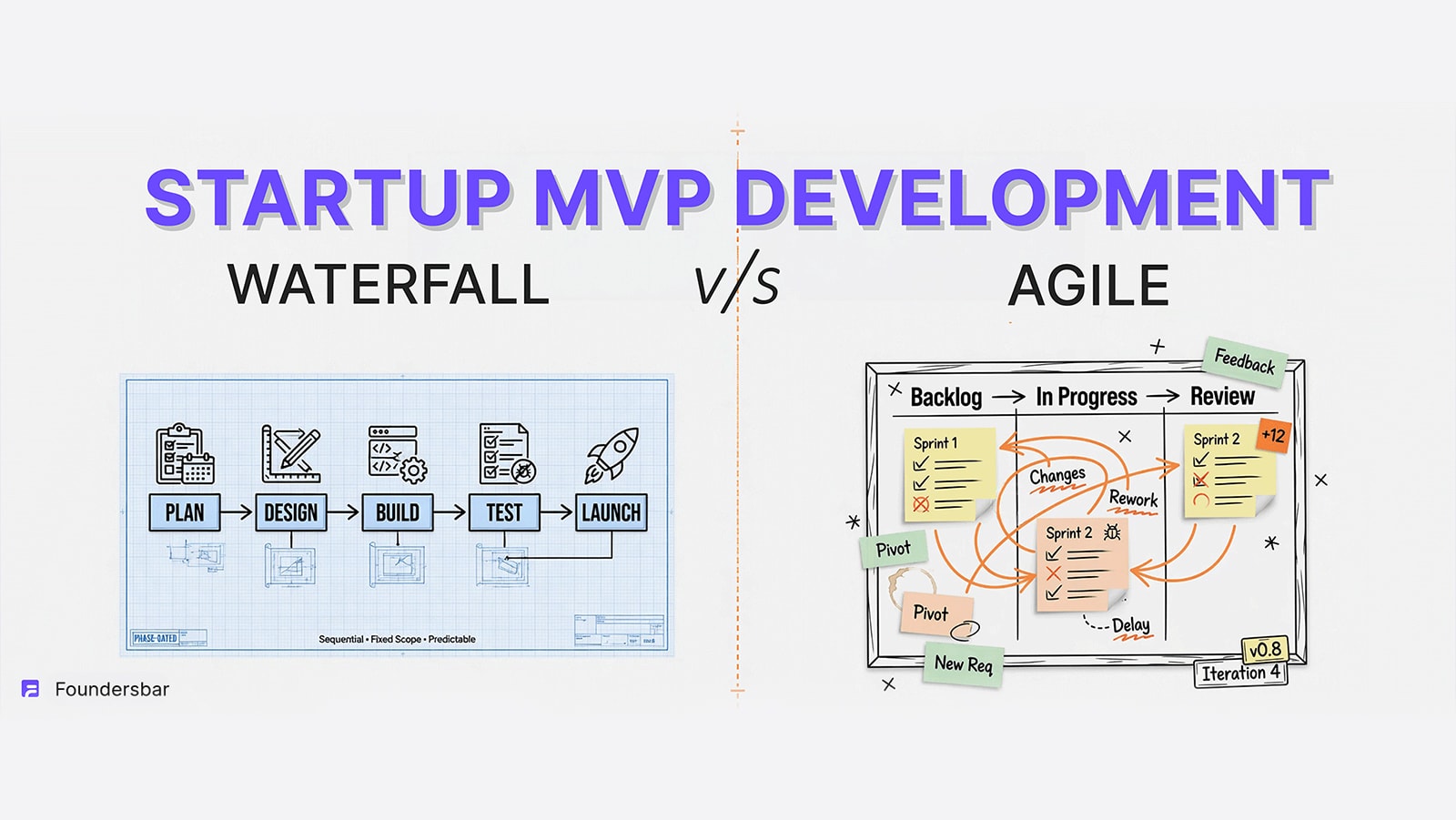
Most founders do not fail because their idea is bad. They fail because they cannot control scope. In startup MVP development, this is the silent killer. You start with a clear vision, sit down with developers or an agency, and within weeks the project has tripled in size, doubled in cost, and stretched far beyond your timeline. The root cause is almost always the same: lack of scope discipline and it usually begins with not spending enough time planning upfront. This problem is especially damaging in fixed-bid waterfall projects, where every extra feature directly hits your budget. Yet most founders still walk into planning meetings unprepared. Here is how to fix it and build a product that actually has a chance of succeeding.

Why scope creep destroys most startup MVP development projects
According to the latest Standish CHAOS Report, only 31% of IT projects are considered successful. The remaining 69% are either challenged or complete failures [1].
One of the biggest reasons? Scope creep.
Recent studies show that 70% of projects experience scope creep at some point during execution [2]. In software development, this number is often even higher. When founders keep adding features without a clear filter, projects quickly spiral out of control, leading to budget overruns, missed deadlines, and products nobody actually wants. [6] [9]
Worse still, 90% of startups fail overall, with no market need cited as the number one reason in 42% of cases [3]. Many of these failures happen because founders built too much, too early, instead of validating the market.
The planning meeting trap
This is where most founders lose control.
You are sitting with developers or an agency. They have built similar systems before, so they start suggesting features:
- We should add advanced analytics...
- What about multi-role permissions for different user types?
- Edge case: what if someone tries to do X at midnight?
You nod along because you want to build something great. Before you know it, the scope has exploded. [4]
Here is the hard truth: It is almost always in the developers or agencys interest to increase scope. More features equal more work and higher project value (even on fixed bids, they protect their margins by inflating estimates)[7]. This does not mean they are trying to scam you. Their incentives are simply different from yours.
Without a founder who has a clear blueprint, scope creep wins by default.
The 5 questions every founder must ask before adding any feature
Before you agree to add (or keep) any feature, force yourself to answer these five questions honestly:
- Does this make financial sense right now? Will it help us reach revenue or retention goals faster?
- Who will actually use this feature? Name the exact user persona. If you cannot, it is probably not ready.
- How often will this edge case actually happen? Will it affect 1% of users once a year or 40% of users every week?
- Would a real user leave because this is missing? This is the ultimate test. Most must-have features fail it.
- Can we launch without this and still deliver core value? If yes, move it to Phase 2 or later.
These five questions are your scope discipline filter. Use them ruthlessly in every planning meeting.
The smarter approach: Launch your MVP first, then iterate
The most successful founders follow a completely different philosophy:
Build the smallest possible version that delivers real value, launch it, watch real user behavior, then expand.
This is the core idea behind startup MVP development and the Lean Startup methodology [5]. Instead of spending months (and tens of thousands of dollars) building a perfect product, you launch fast, gather real data, and let the market tell you what to build next.
This approach dramatically reduces risk. You avoid wasting time and money on features nobody uses, something that kills many early-stage startups
Essential tools to track real user behavior
You cannot make good scope decisions without data. That is why you must install proper tracking before you launch.
Here are the tools every founder should have:
Pro tip: Align these tools with your marketing efforts. When you combine acquisition data with product usage data, you get powerful insights into which features actually drive growth.
How to build a clear product blueprint
Before your next planning meeting with any mvp development companies, create a simple but powerful blueprint:
6. Core Problem What exact problem are you solving?
7. Target User Who is your primary user? (Be specific)
8. Must-Have Features Only the features without which the product is useless
9. Nice-to-Have Features Features that can wait until after launch
10. Future Phases A clear, prioritized roadmap
Keep this document to 1 to 2 pages max[8]. Bring it to every meeting. When someone suggests a new feature, point to the blueprint and ask: Where does this fit?
If you want professional help creating this blueprint, our Product Blueprint service at Foundersbar is designed exactly for this purpose.
Final takeaway: Discipline beats ambition
In startup MVP development, building more features is not the goal. Building the right features at the right time is. [10]
The founders who win are not the ones with the biggest vision on day one. They are the ones with the strongest scope discipline, the courage to say not yet even when it feels uncomfortable.
Quick scope discipline checklist for founders
- I have a clear one-page product blueprint
- I can explain why every single feature exists
- I ask the 5 questions before adding anything new
- I am comfortable launching with a smaller scope
- I have analytics tools installed and reviewed regularly
- I treat planning as a serious strategic exercise
If you are looking for experienced mvp development companies that specialize in fixed-cost MVP development with strong scope discipline, check out our approach at Foundersbar Fixed-Cost MVP.
Scope discipline is not about saying no to everything. It is about being strategic with your time, money, and teams energy so you can launch faster, learn faster, and build something people actually want.
The market will tell you what to build next. But only if you actually launch something worth listening to.
Standish Group. (2025). CHAOS Report on IT Project Outcomes. [Link]
Apollo Technical. (2026). 51 Project Management Statistics To Know in 2026. [Link]
CB Insights. (2023). The Top 12 Reasons Startups Fail. [Link]
Project Management Institute (PMI). (2022). Pulse of the Profession Report.
Ries, E. (2011). The Lean Startup: How Today’s Entrepreneurs Use Continuous Innovation to Create Radically Successful Businesses. Crown Business.
Gitnux. (2026). Project Failure Statistics 2026. [Link]
Taskfino. (2026). 25+ Project Management Statistics That Reveal Why 65% of Projects Fail. [Link]
Hypersense Software. (2025). Scope Creep Management in Software Development. [Link]
Mosaicapp. (2026). Project Failure Rates & Causes: Statistics Every PM Should Know. [Link]
Monday.com. (2025). Project Failure: 10 Causes and Prevention Strategies. [Link]
Thinking about building a product or taking it to market?
Thinking about building a product or taking it to market?
Thinking about building a product or taking it to market?
Thinking about building a product or taking it to market?