
First-time founders
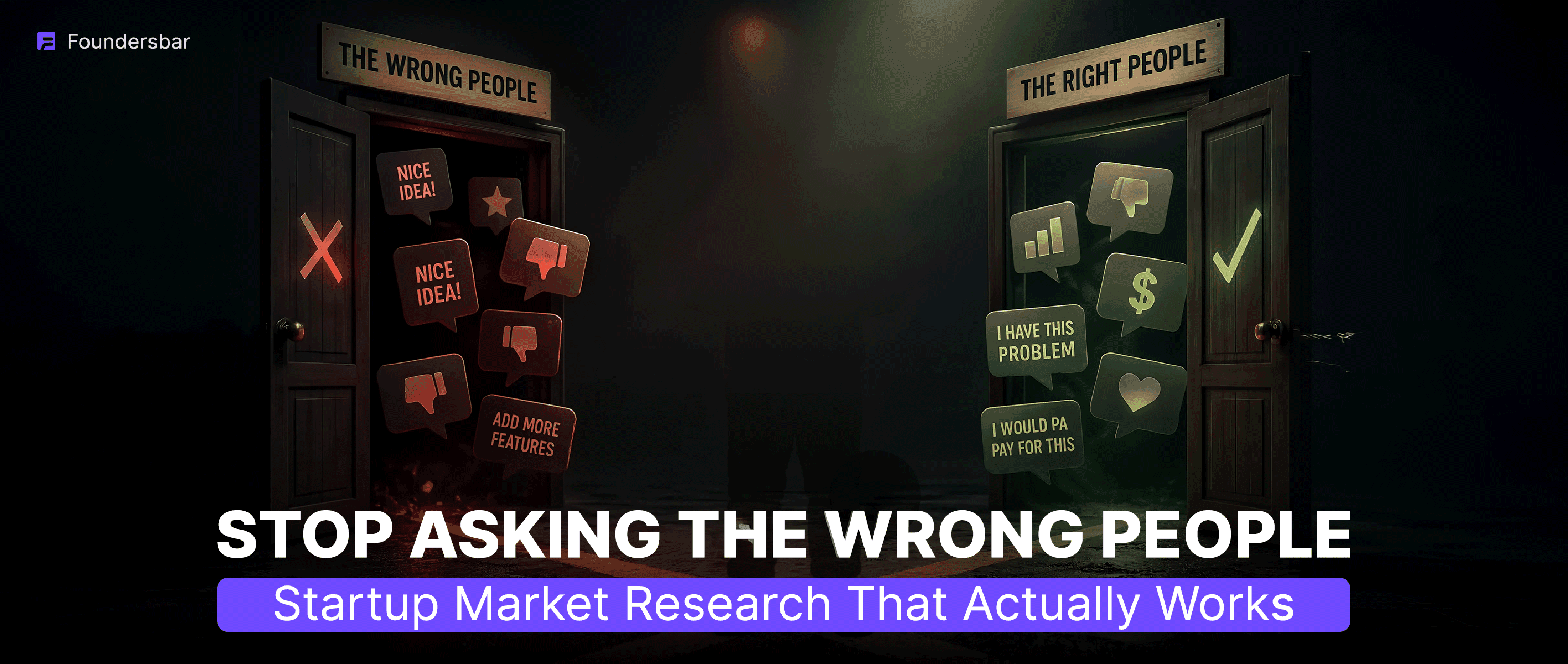
Early-stage founders, especially first-timers, often make a critical mistake during market research: they talk to the wrong people. They ask friends, family, and a few people in the industry for feedback. For example, if you are building a revolutionary POS system, you might interview a couple of restaurant owners. While this feels productive, it is often misleading. The harsh truth is this: Most people who give you feedback have no intention of buying your product. Yet they will happily request flashy features, suggest improvements, and give advice that can send you in the wrong direction. So the big question is: Should you even listen to users who will never buy?


Most first-time founders make the same expensive mistake: they try to build everything into their MVP. They obsess over features, polish every edge case, and spend months (sometimes years) creating a complete product - all before they have even a single real user. What starts as excitement quickly turns into a bloated, expensive, and confusing product that nobody wants. This is one of the biggest silent killers in startup MVP development.

Most founders do not fail because their idea is bad. They fail because they cannot control scope. In startup MVP development, this is the silent killer. You start with a clear vision, sit down with developers or an agency, and within weeks the project has tripled in size, doubled in cost, and stretched far beyond your timeline. The root cause is almost always the same: lack of scope discipline and it usually begins with not spending enough time planning upfront. This problem is especially damaging in fixed-bid waterfall projects, where every extra feature directly hits your budget. Yet most founders still walk into planning meetings unprepared. Here is how to fix it and build a product that actually has a chance of succeeding.
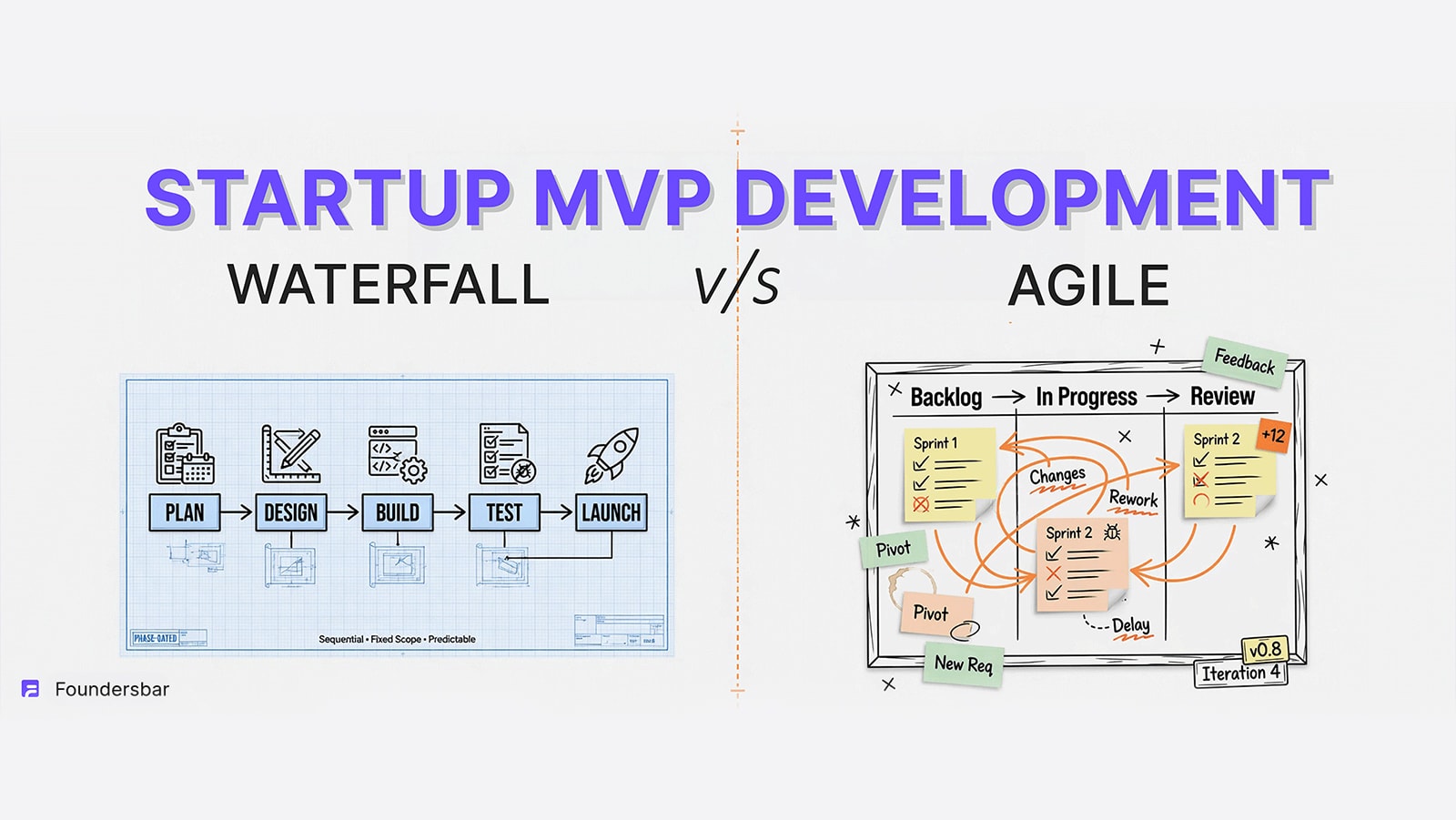
If you're searching for startup MVP development, MVP development services, or the right MVP development process, you've likely seen endless advice pushing Agile as the only way."Move fast, iterate, fail fast." But here's the uncomfortable truth backed by founder experiences and project data: for the majority of early-stage startups - especially part-time founders with strong vision but fuzzy requirements - a structured, blueprint-first approach (heavily inspired by Waterfall's upfront definition) delivers better results than jumping straight into Agile sprints. This is not about rejecting Agile entirely. It is about recognizing that true Agile requires discipline most pre-launch startups simply don't have yet.