Go-to-Market Strategy for Raleigh Startups: Walk or Drive to the Buyer
A practical guide for Raleigh startups on building a focused go-to-market strategy around real Triangle buyers. Learn how to identify target accounts, run design-partner conversations, choose the right sales channel, connect GTM with MVP development, and build customer traction through founder-led outreach, local relationships, and in-person meetings.
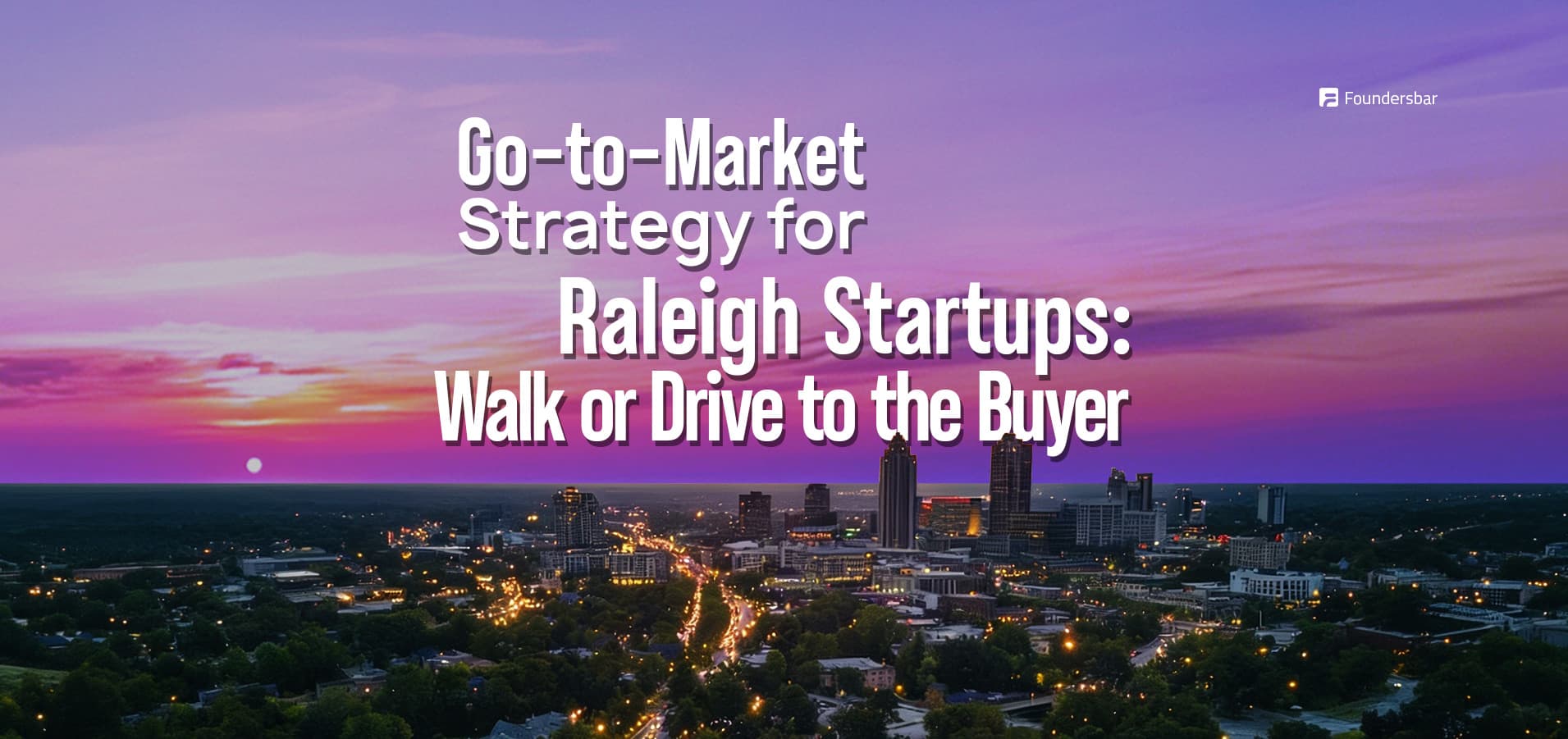
Go-to-Market Strategy for Raleigh Startups: Walk or Drive to the Buyer
GTM in Raleigh is a named buyer, a clickable path, and about 20 design-partner conversations you can walk or drive to. It is not a growth hire, a paid-social test, or a Slack channel in another time zone. If you cannot say who pays in the Triangle, you do not have a go-to-market. You have a deck.
This page is the motion. The city map is the Raleigh startup ecosystem hub. The sequence is how to start a startup in Raleigh. The object in the meeting is MVP development for Raleigh startups.
Who actually buys in the Triangle?
Split the map by who can say yes, not by which neighborhood photographs well.
Ten in-person conversations beat a hundred cold emails. Hospital and plant buyers still close in rooms. State pilots are slow and real. A coffee near the Capitol is not a pilot.
Security questionnaires and vendor onboarding show up after a champion wants the pilot. Do not stall the first ten meetings to write a SOC 2 essay. Do not ignore them when the champion is ready and legal is on the thread.
A named account list is a GTM asset. A CRM full of meetup scans is not. Write the company, the champion, the problem they said out loud, and the date of the next meeting. If that row is empty, the week did not happen.
Should GTM start downtown or on I-40?
Walk if the account is software or government. That density lives on the downtown Raleigh startup scene, including Red Hat, Pendo-adjacent teams, agencies, coworking rooms you actually use. Drive if the account is a hospital or a plant. Downtown is not Durham. Glenwood is not GTM.
Live next to the meetings you will attend four days a week. Do not lease Class A so the GTM “looks serious.” Year-one housing and office math is on the cost page. Presence is a calendar, not a skyline.
Parking, I-40 time, and a short-term rental beat a 12-month downtown lease you signed so you could “be in market.” Two weeks of meetings will tell you whether the buyer is walkable. The lease will not.
What has to exist before you sell?
A path a design partner can click. Auth, one workflow, logging. That build is defined on MVP development for Raleigh startups. If the product is still a paragraph of vibes, stop selling. You are collecting introductions you will burn.
If you cannot ship it yourself, pick one path, hire, partner, or fractional judgment, on how Raleigh founders choose a tech partner and hiring engineers in Raleigh. Teams that need architecture more than a crew should price fractional CTO services for early-stage Raleigh founders first. The partner ships the object. You run the meeting.
When a founder needs the build and the first GTM system without lighting the raise on a local bench, teams such as Foundersbar sit in that gap: blueprint, fixed-cost MVP, and founder-owned IP.
Founder-led does not mean founder-only forever. It means the first twenty conversations are yours. A contractor who sends email sequences from another coast is not founder-led. They are a delay dressed as process.
How many conversations is enough?
About 20 with people who can pilot, not 20 with people who are polite. A design partner has a problem, a budget path, and a date for a second meeting. A “love the idea” coffee is not a data point.
Write what they could not finish. Change one thing. Come back. If you cannot say on Friday what you will change on Monday, the GTM is a brochure. Instrument the stall, not the page view.
University founders: the lab is not the buyer unless the hospital or the plant already said so. Tech-transfer paper first. Then the conversation.
Warm intros in this market usually come from operators, not from a cold LinkedIn blast. Someone who left Red Hat, SAS, IQVIA, or a health system and still has the internal number is worth more than a purchased list. Ask for the intro after you can show the path. Asking before you have a product is how you spend the relationship.
Which channel should you pick?
One. Founder-led outbound to a named Triangle list. Warm intros through people who already sit at Red Hat, SAS, a hospital, or a plant. A scoped agency pilot. That is a channel. Four paid tests and a content calendar are not a channel. They are how founders spend the Raleigh cost discount.
Paid acquisition comes after one motion already works without ads. Until then, every dollar of burn belongs on proof, product and meetings. See the real cost of starting a company in Raleigh before you fund a “brand awareness” line.
Do not hire a growth person to hide an unscoped build. Distribution is a different search from the first engineer. Hire it last.
Events are useful if they produce a second meeting. CED rooms, Raleigh Founded days, and a hospital innovation office hours block can do that. A badge and a selfie cannot. Leave when you have three names. Stay home when you already have the three names and have not called them.
How to run GTM in 30 days
- Name ten accounts that can pilot this quarter. If you cannot, the city is wrong or the wedge is wrong.
- Ship or scope the one path they will click.
- Book ten meetings you will attend in person. Walk or drive.
- After ten, keep the list or cut the story. Do not add a persona.
- Only then decide if a second channel exists.
Day 30 output is a list that got smaller and a path that got clearer, or a decision that Raleigh is the wrong market. A longer slide is not output.
Price is part of GTM. A Triangle mid-market buyer will ask what the pilot costs before they ask what the platform will cost in year three. Have a number for 90 days of use. “We will figure pricing later” is how meetings end with a compliment and no second date.
If two founders split GTM, split by account type, not by “one does product and one does Twitter.” One owner for software and government downtown. One owner for hospital and plant if that is the wedge. Two people pitching the same champion is how the Triangle feels small in the bad way.
What founders get wrong
- Treating First Friday and Glenwood as pipeline.
- Selling a therapy the way you sell SaaS, or the reverse.
- A fully remote GTM into a hospital or a plant.
- Buying ads because the calendar is empty.
- Letting the vendor own the customer conversation.
- Calling a student demo day a design-partner program.
Another miss: selling “the Research Triangle” as the customer. The Triangle is a geography. The customer is a person with a budget. Name the person.
If you are deciding whether Raleigh is the right market, mapping twenty conversations onto a clickable path, or ready to turn that wedge into a product without lighting the raise on a local bench, start with the relevant spoke above or move to execution planning. The city still rewards a hard scope and buyers you can walk or drive to. It still punishes myth-chasing. For founders who need a development-ready blueprint, a fixed-cost MVP, GTM systems, or fractional technical judgment, partners built for startups rather than enterprise process close the gap between idea and traction.
Raleigh is still good for the companies that need this market, including research-adjacent talent, hospital or plant buyers, enterprise software sold into the stack already here. It is a bad default for everyone else. Use the Raleigh startup ecosystem hub as the map, then decide with the cost and hiring pages open. Check eligibility at foundersbar.com.
Frequently Asked Questions
Thinking about building a product or taking it to market?
Thinking about building a product or taking it to market?
Thinking about building a product or taking it to market?
Thinking about building a product or taking it to market?