How Austin Startups Get Their First 10 Customers
A practical guide for Austin startups on getting their first 10 customers through focused, founder-led outreach. Learn how to identify real buyers, turn customer conversations into second meetings, validate the workflow before launch, and build an early pipeline without relying on branding, events, or a funding round.
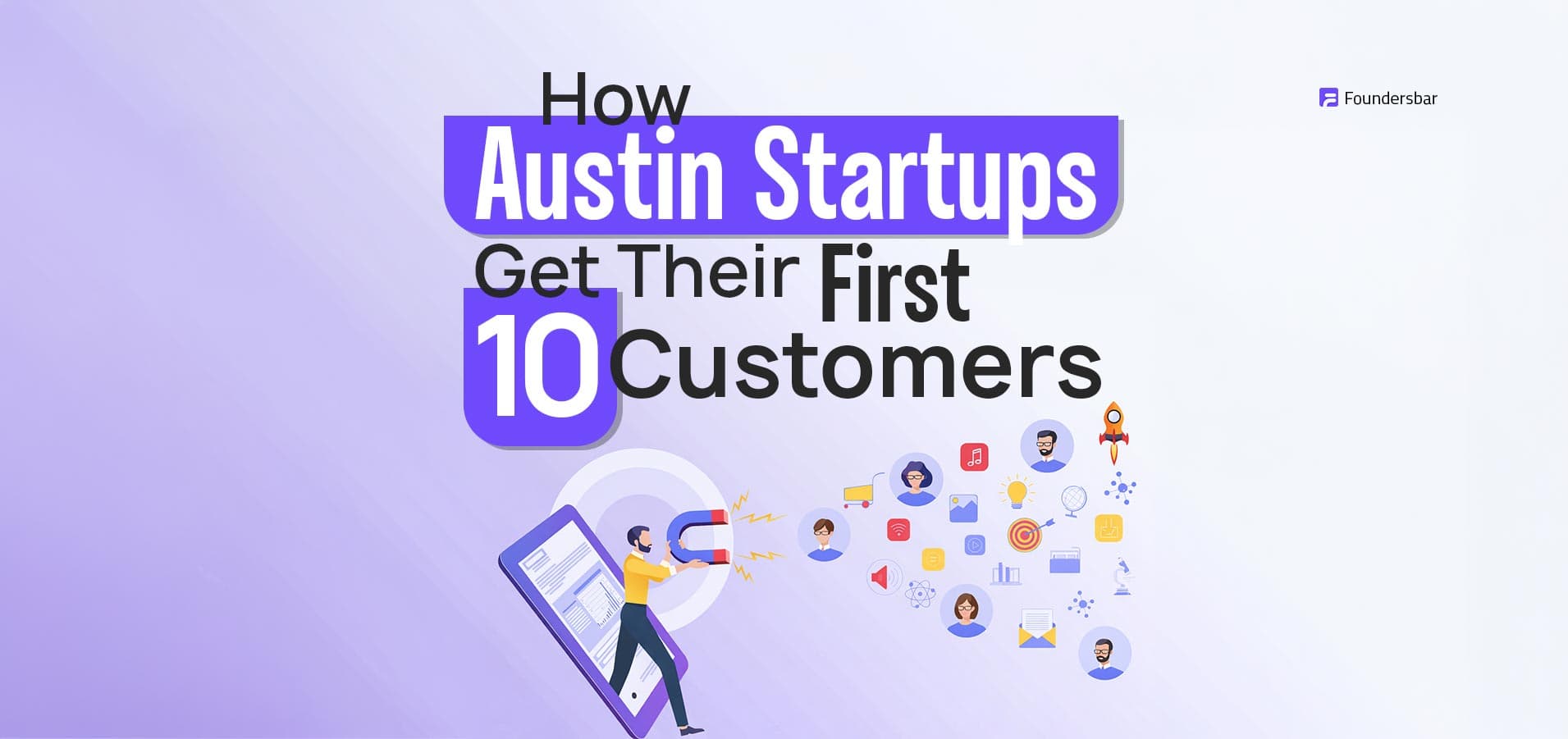
How Austin Startups Get Their First 10 Customers
Name them before you decorate the round. Ten buyers you can meet in Austin beat a brand film and a conference badge. Energy, industrial software, security, health tools, and mid-market software already have operators in this metro. If you cannot list ten names, the city is not the problem and another intro will not fix it. A raise does not create the pipeline. A downtown desk does not create it either.
Who are the first ten?
People who feel the job and will sit with you. Not a persona. Not a list you bought. In Austin that is often an operator at a software company, a clinic near Dell Med, a plant manager, or a security lead. Write the painful workflow in their words, not yours. If you cannot, you have not talked to them yet. That test is validate a startup idea in Austin before you build. Selling before that yes is a deck, not a pipeline.
A first meeting that does not produce a second meeting is a no. Track that. A sheet you actually open is enough. The goal of the ten is five of them looking at the workflow before you call the product done, and a few of those coming back.
What is the sequence?
- Write the painful workflow in their words, not yours.
- Put the product in front of five of them before the MVP is done.
- Track who came back. A meeting that does not produce a second meeting is a no.
- Only then spend on a site, a list, or paid.
The first email after a real conversation has three lines: the job in their words, a price, and a date. A deck with no next step is a no. Send it the same day. If they do not answer, one reminder with the same three lines is enough. A third email that adds a new feature is you negotiating with silence.
What does not get you the ten?
SXSW is a March sales week if those ten meetings were booked before you flew in. It is not a funding strategy. A booth without a follow-up owner is a costume. Founders collect cards, send a deck, and wait. That is the failure mode.
Capital Factory is a room. UT Austin and Dell Med are talent sources. Tesla, Oracle, Apple, and Dell are why senior offers are expensive. None of them are a customer unless the person in the room has the pain and will book again.
What has to exist before you sell?
One workflow, not a platform. If the spec is still a deck, you are selling a meeting about a meeting. The cut belongs in the product blueprint before you hire in Austin. The price of that cut sits on MVP cost and scope for Austin startups. A scoped build commonly starts around $35,000 once that spec exists. If you cannot win the local engineer, build an Austin startup without a local engineering team. The shop filter is how Austin founders choose a tech partner. If you cannot review the work, that is a fractional CTO for Austin founders, not a salesperson.
Do not hire an Austin senior engineer to get the first customers. That salary often sits around $150,000 to $190,000, and campus employers already bid. The first ten are a founder job. If you cannot make the calls, you do not have a go-to-market problem. You have a founder who does not want to sell.
Foundersbar deploys go-to-market systems with the build for eligible startups, so the tracking exists when the product ships instead of three months later. Eligibility is at foundersbar.com, after you can name the ten, not instead of naming them.
How do the first ten fall apart?
The founder treats a warm intro as a customer. The intro is a door. The customer is the person who takes the second meeting. Write the log: name, the job in their words, whether they booked again, and the date. If the log is empty, you have not started.
They also widen the product because a downtown conversation went well. A second workflow is a later release with its own price. A demo of one workflow beats three half-built ones.
Paid before a single return visit is clicks for a product nobody has agreed to use. Turn it off. Ten meetings and no second meeting means the offer is wrong, not that you need a better film. A forever free pilot is not a customer.
What comes after the tenth yes?
A site that says who it is for, analytics on the workflow, a way to capture the next ten, and one paid or outbound motion you can turn off. That setup is the marketing stack for Austin startups after the raise. Not a twelve-page site. Not a retained agency. Not a brand film.
Validation, the first ten, and growth are separate jobs. Validation is before the build. The first ten are this page. Growth is what you turn on after a workflow retains. When the tenth buyer has used the workflow twice, then open the stack. Not before.
If you are deciding whether the first Austin customers are named, mapping the workflow they will actually use, or ready to turn a wedge into a pipeline without lighting the raise on a brand film, start with those ten names or move to execution planning. The city still rewards a hard scope. It still punishes myth-chasing. For founders who need a development-ready blueprint, a fixed-cost MVP, GTM systems, or fractional technical judgment, partners built for startups rather than enterprise process close the gap between idea and traction.
Austin is still good for the companies that need this market. It is a bad default for everyone else. Use the Austin startup ecosystem hub as the map, then decide with the marketing page open. Check eligibility at foundersbar.com.
Frequently Asked Questions
Thinking about building a product or taking it to market?
Thinking about building a product or taking it to market?
Thinking about building a product or taking it to market?
Thinking about building a product or taking it to market?